Kpop Demons Hunters is My New Song and Dance Obsession: A Comprehensive Analysis
Since finally watching Kpop Demon Hunters (2025) last week, my head has been filled with nothing but,
We're goin' up, up, up, it's our moment
You know together we're glowin'
Gonna be, gonna be golden
(づ ̄ ³ ̄)づ ♡
(No, I can't make hearts out of thin air like the Saja Boys, but I can at least paste them into my text.)
It's in-fec-tious, as Mira would say.
Why did it take me this long to watch it? Well, non-Netflix subscriber aside (I'm always late to the game with trending movies), "Kpop Demon Hunters" honestly sounded kind of ... silly.
It's a combination no one ever expected would be a thing, and yet it is now. But prejudices aside, I was still intrigued by it and knew I would watch it some day, especially after TIFF 2025 even featured a sing-along version of it in theatres.
On a quiet, cozy winter day with my mom, after dinner, we settled down onto our plush couch and pressed play. We were hooked – even my mom, who's barely touched Kpop, Cpop, Jpop, or any other pop of the non-soda variety in her life – except for, now, "Soda Pop." Her taste is supremely Dao Lang and not an inkling of Le Sserafim. So, to say she liked the movie and liked the songs too is a huge win.
I had another little prejudice that prevented me from reaching for it sooner, which is that I'm simply not a huge Kpop fan. I like some songs, love some others, but the industry standards on plastic surgery and slave contracts really turn me off. Le Sserafim's dance videos specifically are the most I've felt for a Kpop group since KARD and Kara.
But I don't hate it, either. I love the level of performance and choreography Kpop represents. One doesn't need to be a sasaeng to know how many billions of dollars the industry pulls in for Korea with this soft power each year.
After hearing nothing but rave reviews for Kpop Demon Hunters, I was curious to see how the creators executed such a massive theme and compiled it into what I thought was a kids' movie.
It is not just a kids' movie.
It's an everyone movie, and here's why.
The Choreography
Dance, dance, dance!
The choreography for HUNTR/X's songs are insane! I've never seen idol routines animated so smoothly and non-awkwardly in any show before. In fact, I'm not sure it's ever been attempted.
These are actual industry-standard, replicable dance numbers that nearly made my eyes pop out of their sockets when I saw the girls performing them on the movie's concert stage. "Replicable" is important here because the "cover dance" phenomenon of Kpop has become its own industry and fueled many an independent creator's YouTube revenue streams.
I've seen choreography in many a movie that's either a) unachievable for the general public, or b) animated from the 2000's and doesn't have the pixel-perfect technology of today.
(The Greatest Showman and Barbie in the 12 Dancing Princesses are my exceptions, with a few notes.)
HUNTR/X's choreo had my dancing genes want to get up and learn it, so I can also share in the fun.
It's even better that the entire film was made on the basis of concert lighting, visuals, and K-drama references (more on that later). The choreography isn't just steps; it's also when Rumi holds onto an aerial hoop and literally sweeps across the air over her adoring fans.
Choreography is also in the action scenes when the girls fight off the demons throughout the film (also more on this later).
Allegedly, this film took four years to make – with Sony Pictures even selling the rights to Netflix because they didn't believe in it enough, word on the street goes – and it's undoubtedly set a new standard for animators and storytellers alike.
The Costumes
I know what I'm going as next Halloween.
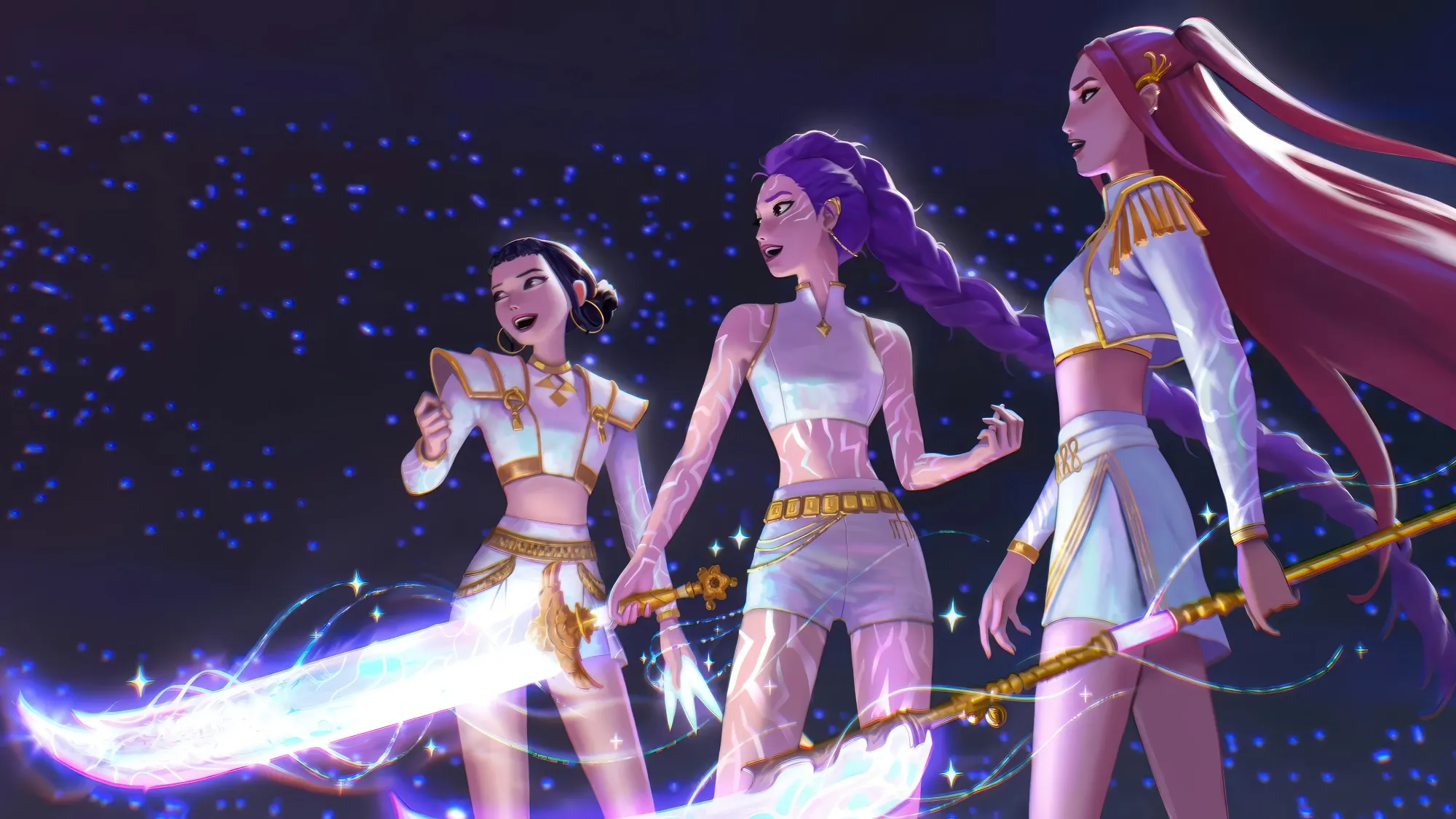
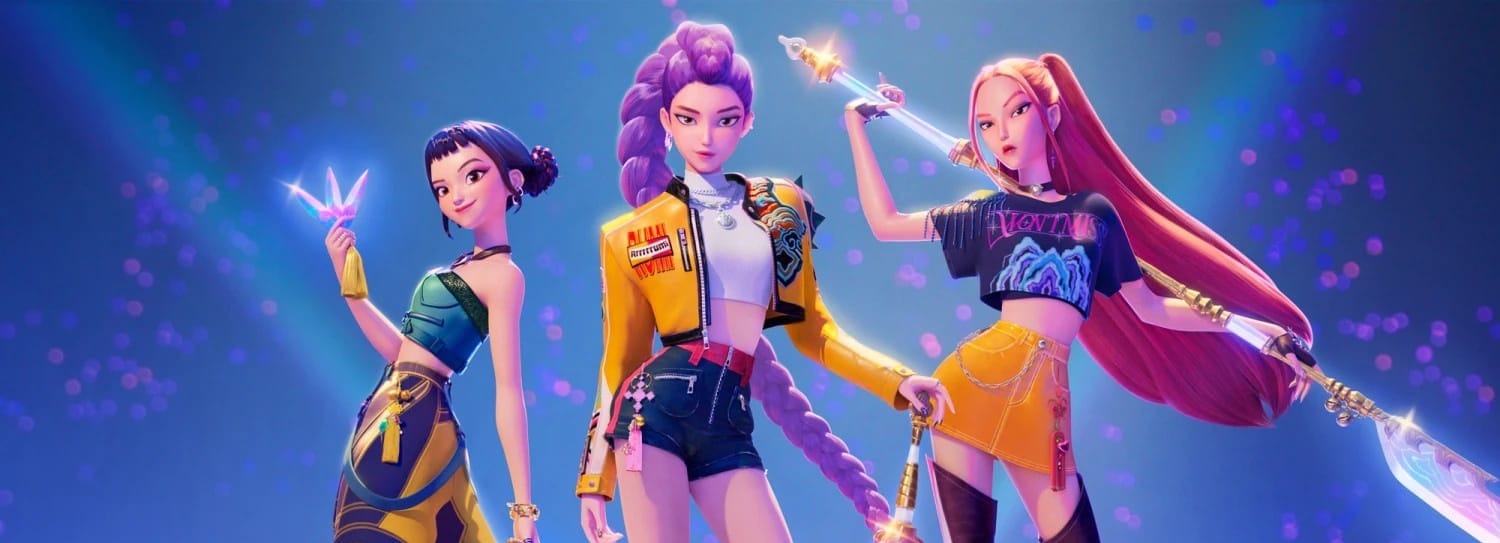
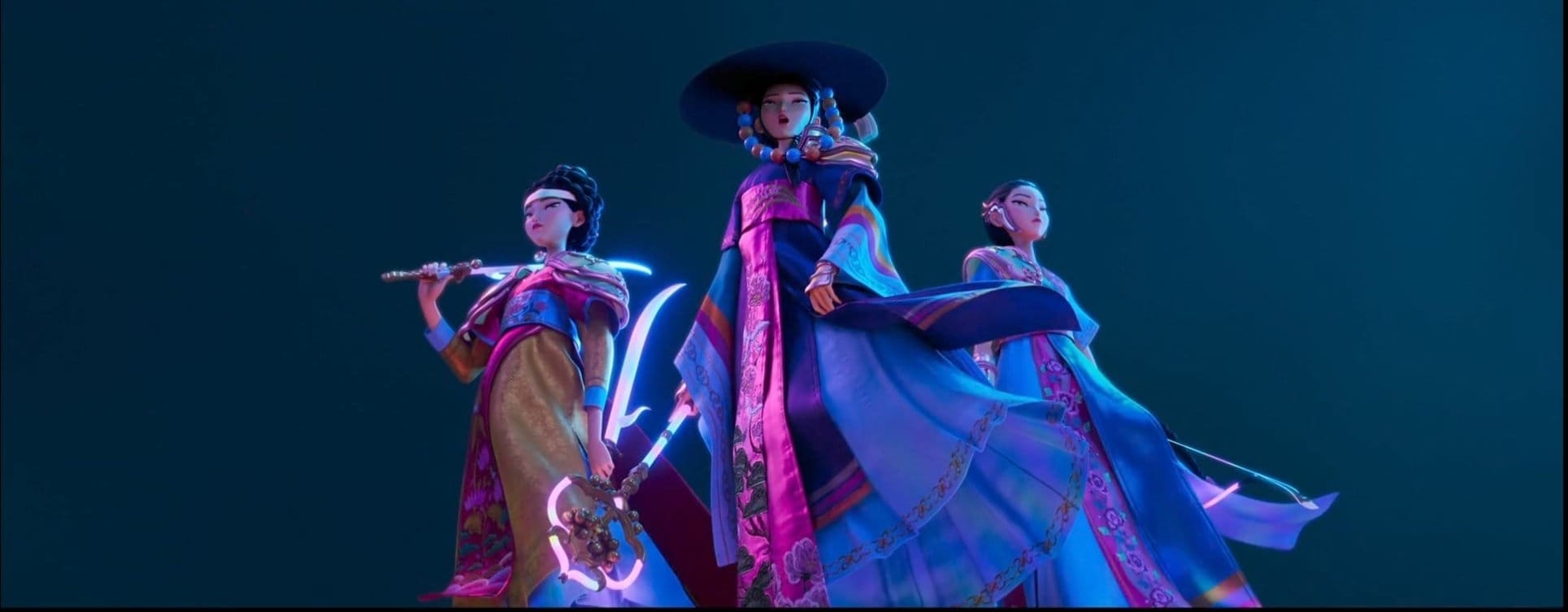
The stage and personal outfits of Rumi, Mira, and Zoey are the stuff of every fashionista, otaku, and homebody's dreams. Somehow they cater to everyone.
One of the reasons the classic magical girl anime back in the day, Cardcaptor Sakura (2000), was a huge hit is because Sakura was one of the only animated characters who actually changed their clothes every day (or, more accurately, with every battle), like a real girl.
Sailor Moon (1992) will always hold its place for rebranding the magical girl genre as we know it today – or until Puella Magi Madoka Magica came out (if you know, you know). But it fell into the same pattern as other anime with regards to clothing: characters wore the same school uniforms and battle outfits every single episode, with special designs only for beach days, balls, or "upgraded" transformations.
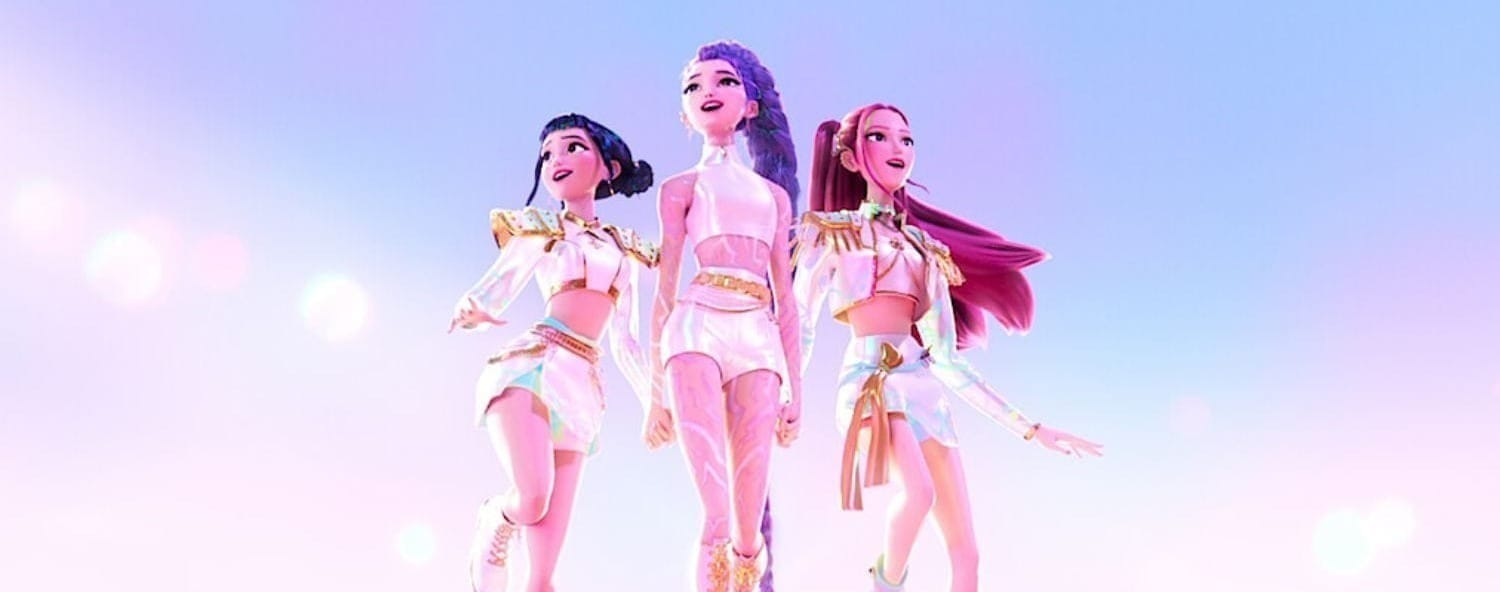
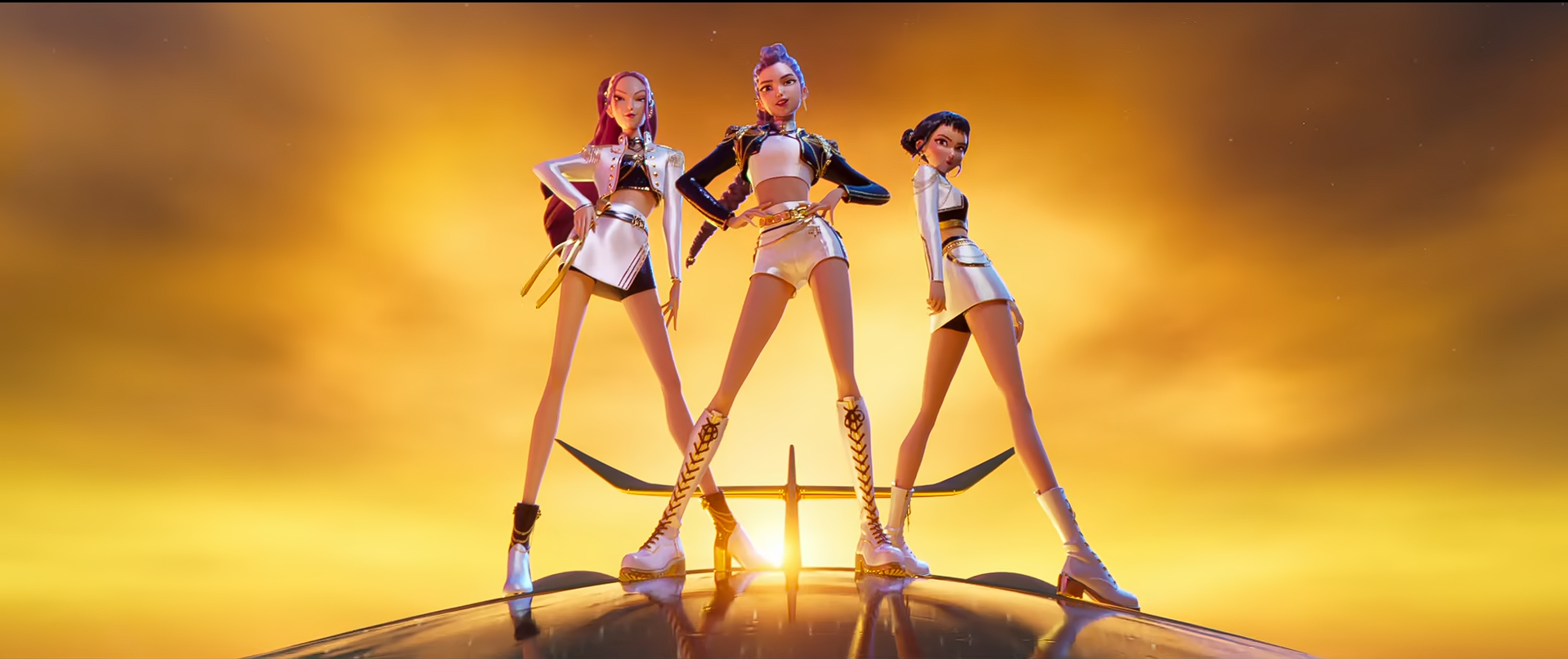
"Like a real girl" is the key here. HUNTR/X is the group identity onstage, and they shine in their black, gold, and iridescent outfits with signature shoulder pads. Everything is form-fitting to show off their literally perfect proportions, much like Kpop idols in reality.
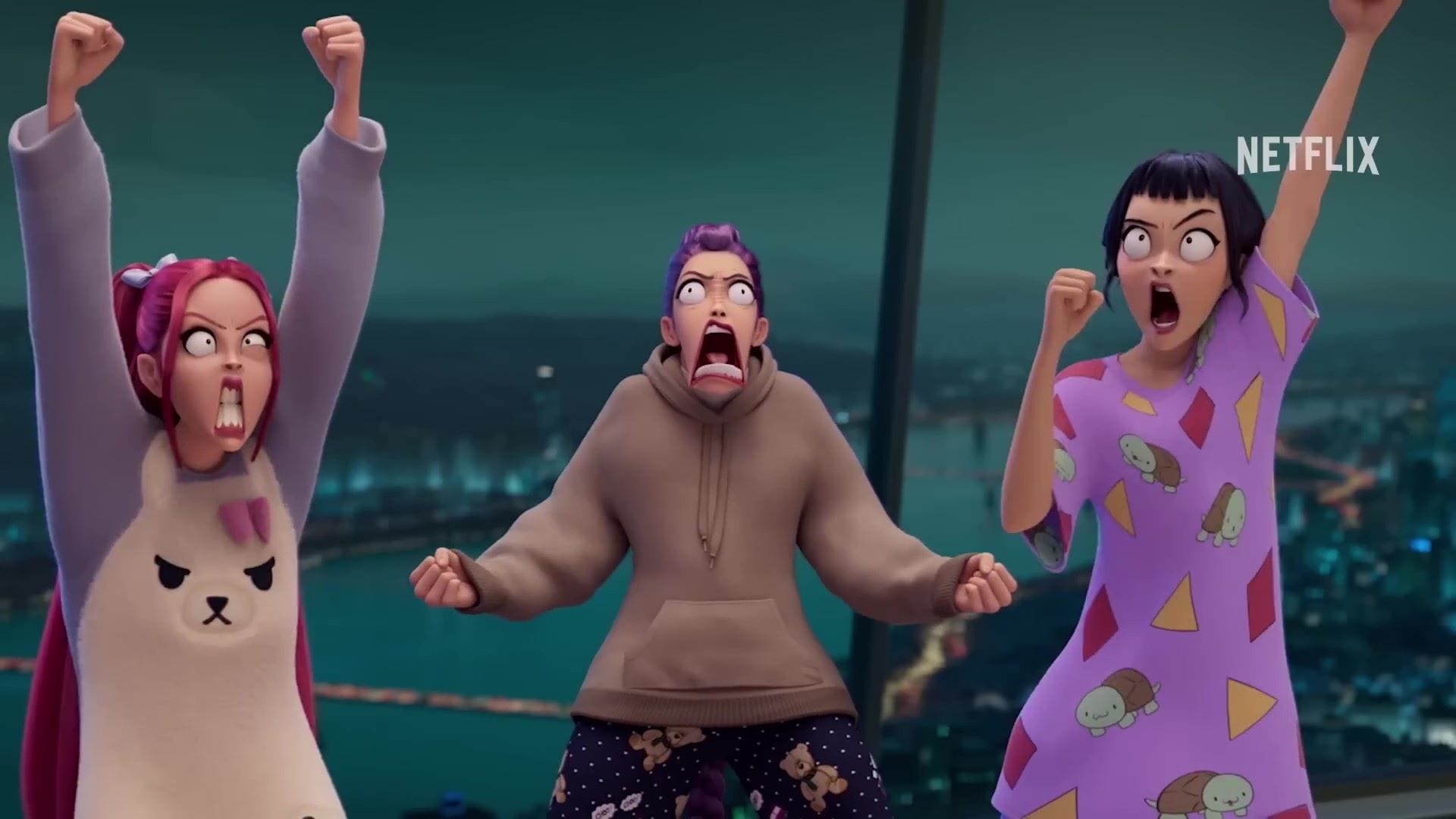
Offstage, Rumi, Mira, and Zoey immediately discard their stage costumes for comfy bathrobes and the cutest jammies to hit the Internet since Sabrina the Teenage Witch (1996).
(That moody bear oversized sweater that Mira wears? I need it.)
The pajamas are possibly my favourite outfits of theirs because it also shows off each one's personality. The bear on Mira's sweater is obviously a joke to Mira herself; they look exactly alike, the same judgey half-lidded stare but made into a furry ball of cuteness on the print. Possibly Mira's way of showing she also wants to be a ball of fuzz sometimes – and we know Mira's kindness shines through greater than her "jagged edges" ever can.
Zoey's top-and-bottom PJ set with adorable turtles sticking their tongues out is an homage to Zoey's naturally colourful, bright, and cheeky tendencies. She doesn't have a lot to hide, not since joining HUNTR/X. She's that maknae who lives with her heart on her sleeve, and though Dr.Han has pointed out her people-pleasing, she's the one her teammates go to for a pick-me-up.
Rumi's pajamas, interestingly, are the plainest and most dull. Underneath her shiny exterior, especially before the finale where Rumi comes to terms with her demon self, is a lonely girl who's built up so many walls to protect her friends from "the truth of what she is," not knowing the walls kept her from her true self as well.
Her PJs are dull (except for the teddy bear and choo-choo train pants), but they're also the comfiest and most relaxed. Oversized hoodie, loose pants, and fuzzy slippers – all designed to reflect Rumi's deep desire to let loose and just be.
Together, the switch from stage to home is also the girls' cue for leaving work at work, where it belongs.
Though short-lived, the rest of the film also features a whopping variety of outfit designs for demon hunters past as well as the Saja Boys. You can see everything from traditional gut (the name of the ritual that inspired the scene with the original Hunters) ceremonial robes to leather "kill outfits" to Joseon-era-inspired demon costumes for "Your Idol." (Historical references source: https://koreatravelpost.com/kpop-demon-hunters-places-to-visit-in-korea/)
The Textures
Another leap for animation.
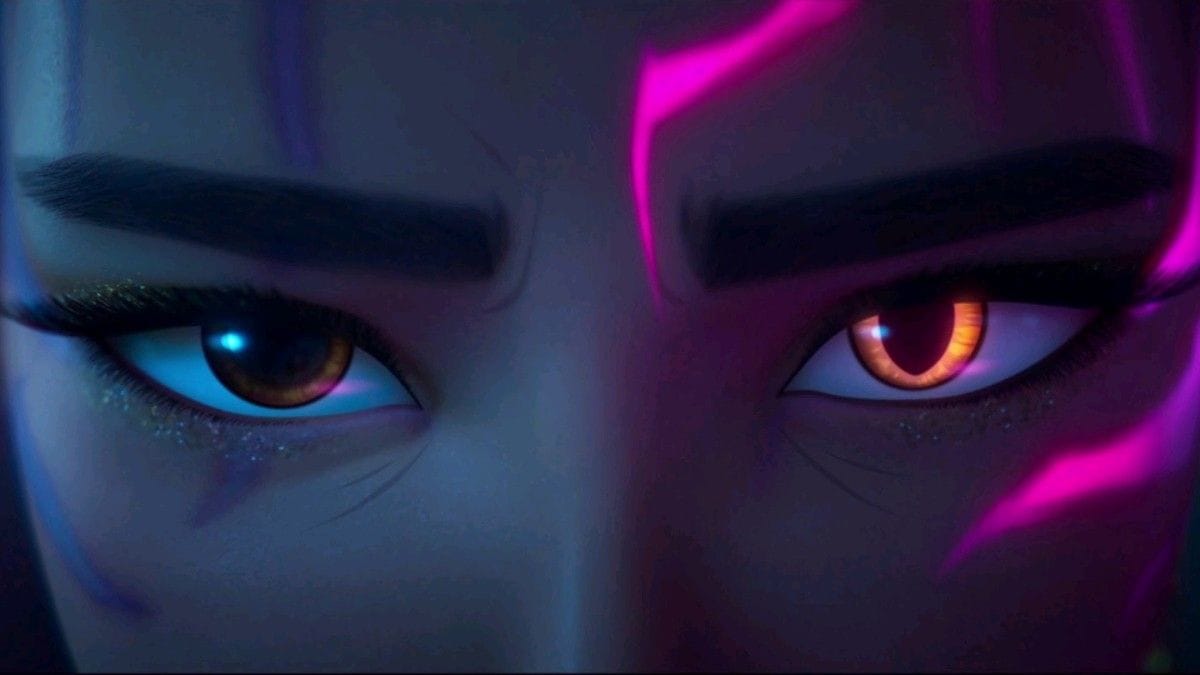
On the topic of design, let's talk about textures. Kpop Demon Hunters is outstanding in this field. I'd say they've topped the charts not only with "Golden" but with the uber-realistic portrayal of fabric, hair, and makeup.
Something that Disney has kept a tight leash on since entering their 3D era, Kpop Demon Hunters has blown out of the park. Pause on any close-up of the characters' faces, and you'll see every bushy eyebrow hair, every eyelash, every sparkle from their aegyo, every stud and pasted-on rhinestone around their eyes. It's gorgeous. Pinterest boards are having a field day.
However, a really interesting design choice is that wrinkles are not made hyper-realistic. We don't see actual folding of skin when a character bunches their brows together; instead, they take a page from Spiderman: Across the Spider-Verse (2023) with their blend of comic-book, flat-line animation mixed with 3D and cutting-edge motion sequences.
Kpop Demon Hunters is, after all, a mix between superhero tale, fantasy, folklore, magical girl, anime, coming-of-age, and idol bildungsroman. It's only natural that their animation style would draw from mixes as well.
Beyond close-ups, can we talk about how literally fuzzy Mira's bear sweater is? (Have you figured out I'm obsessed with it yet?) It looks just like fur, even more than the fur on the demonic cat.
Their leather outfits actually look like leather, and Zoey's freckles – my gosh. What an intricate detail.
What I particularly love about the texture and design is that when the girls are in the privacy of their home, they don't have makeup on! Sure, they still have perfect eyebrows and naturally swept-up eyelashes, but other than that, you can actually see the dark circles underneath their eyes! Their lips are paler, and there's less blush. Finally, a girl's girl movie that respects the fact that people take off their makeup at home, or don't even put it on.
Every live-action ever that has the girl waking up in the morning with perfectly set makeup is rolling in their grave right now.
The Characters
Yin and yang unite.
The film doesn't leave a lot of time for world-building, but what it lacks in that, it more than makes up for in character development.
These girls are so lovable despite their flaws simply because they are believable characters. And believable characters are based on believable people.
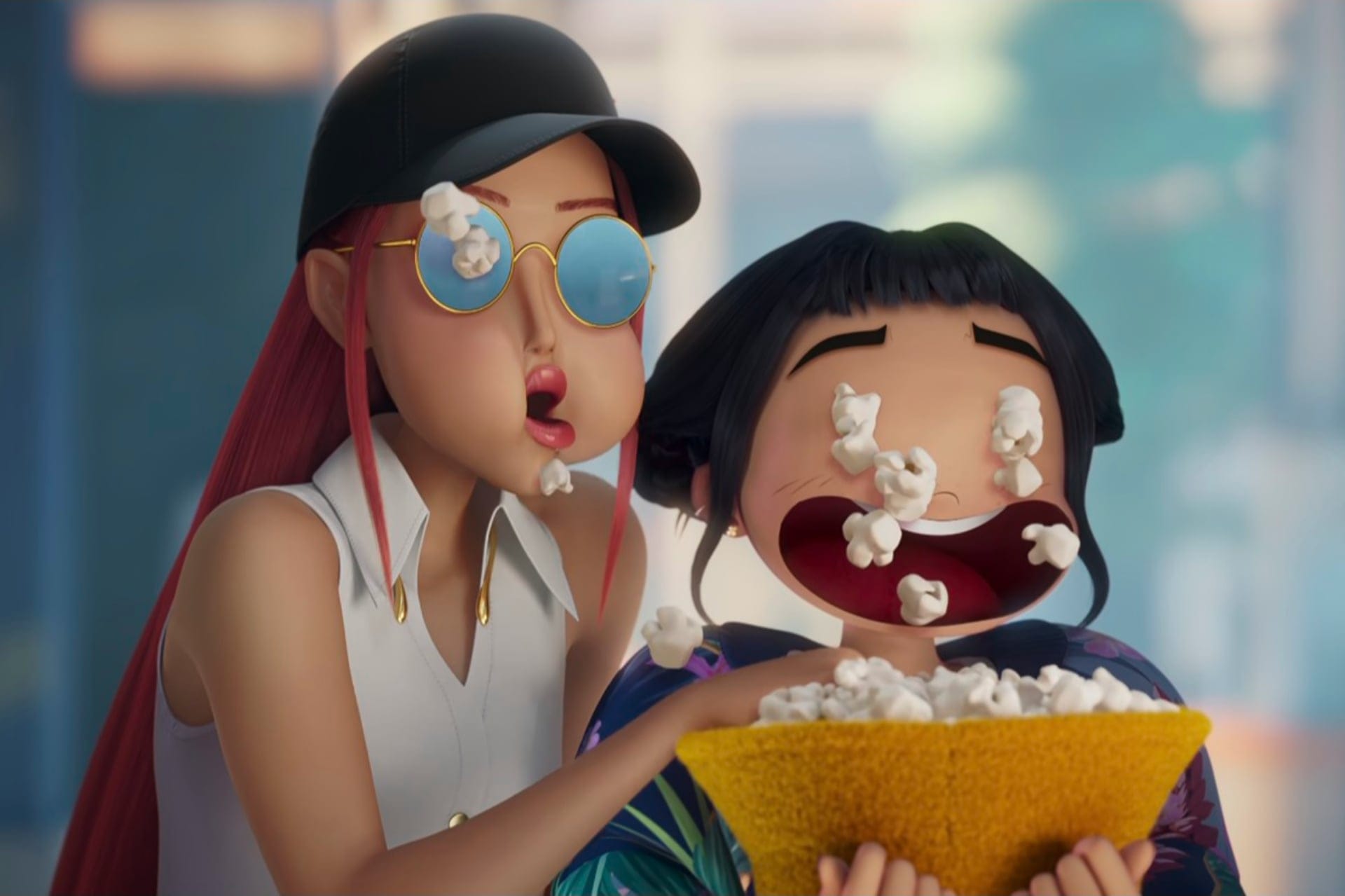
For a superhero movie, our protagonists aren't only shown as bad-ass, enemy-defeating robots that make spiels about justice and the dark side. Those themes are there, but the true allure is the in-between: when the girls drool over sexy guys and hot abs; when they pump each other up like Jojo's gone mad; when they cry uncontrollably in the bathhouse they finally get to go to together.
Their personalities might be exaggerated a little bit for the sake of clarity, but these are all things that guys and girls everywhere will recognize – crushes, friendship, and catharsis. These are believable states.
The women show that they can be equal parts masculine and uber-feminine, a rarity in the history of film. Masculinity and femininity are more spiritual traits than anything natural-borne, and it'd be a disservice to say anyone – film or otherwise – has only one or the other, just to different degrees.
Rumi in particular has been bound by a duty to defeat the demons since birth, owing to her mother being a previous Hunter. Her dark side is what the movie focuses on. Her yin and yang don't come together until the finale, when she realizes that loving herself as a whole is the only way to stave off the demon within her.
Her confidante and potential love interest, Jinu, has a great, if predictable, development too. More on this in the "themes" section.
The Girlhood
Girls help girls.
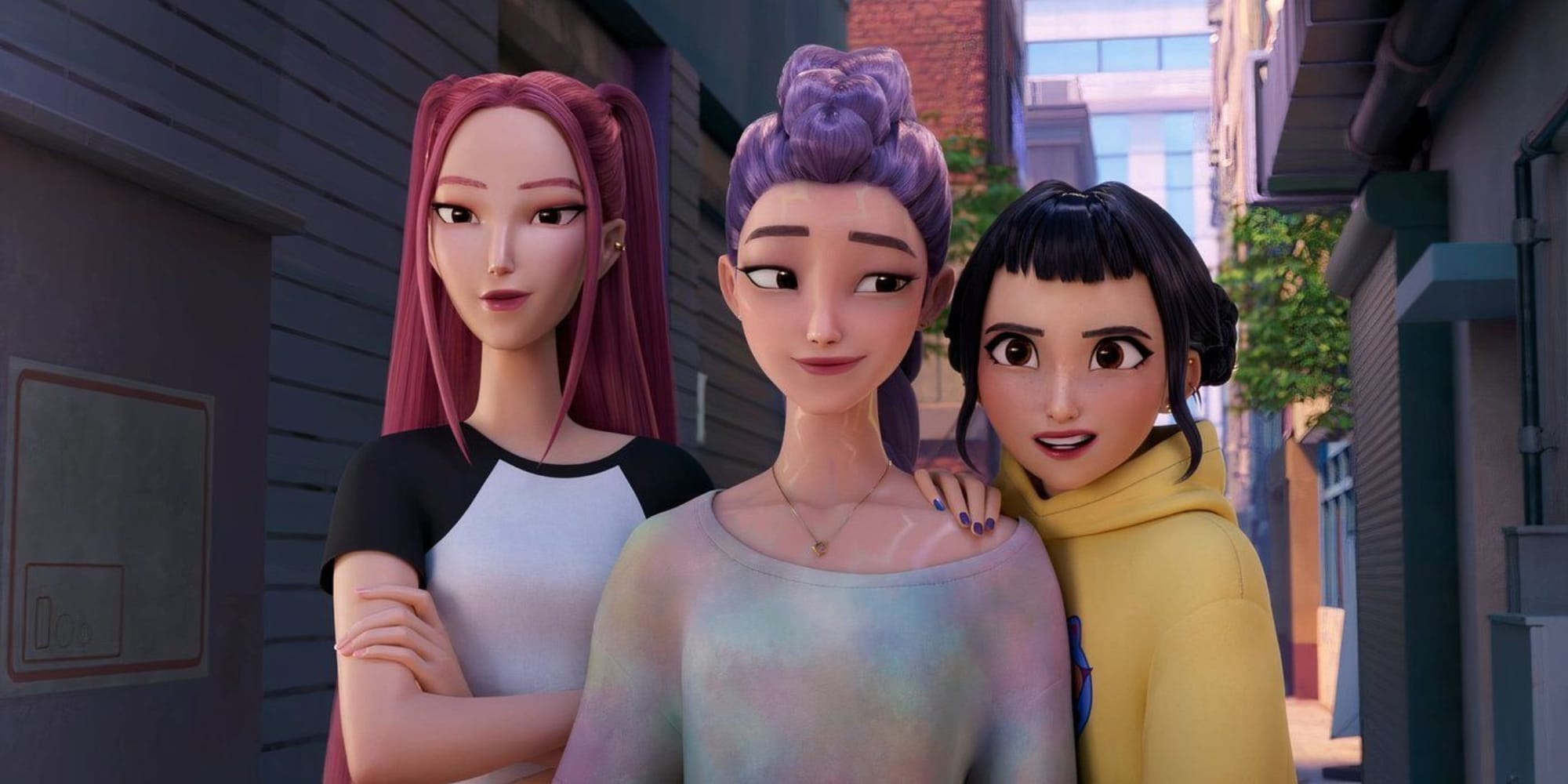
The girlhood I'm talking about is friendship and found family here. I saw a great comment underneath a Kpop Demon Hunters video that said this is proof people don't hate women characters; people just hate poorly written women characters.
Female friendships in film and TV often get the short end of the stick for being portrayed as catty, petty, and begrudging. No doubt, this is possible and does happen a lot in real life. The problem is when media over-focuses on these qualities of what are essentially unhealthy friendships to begin with, and audiences start to see that stereotype as truth.
The great thing about Rumi, Mira, and Zoey's deep bond is that it's founded on trust, (mostly) honesty, and a strong underlying current of responsibility to reach for the same goal (slaying demons while maintaining covers as pop stars).
The girls are focused, exact, and know what they want. There's no BS here, no fighting over boys (thankfully, they all have different tastes). Even in the face of hot abs and even hotter visages, the girls show they would undoubtedly choose their girl bond over anything else.
Think about it – would you rather watch girls face off in jealousy, or would you rather see them lift each other up to their true potential?
Like any relationship, they have their conflicts and misunderstandings, with some moodiness sprinkled in here and there. But this is the calmest and cleanest I've ever seen a female friendship be mended onscreen, and it's so refreshing to watch.
The Saja Boys' disjointedness is partially why they don't last long. They're not on the same page. Even their identities are fake.
The girls go hard in their fights, but they go even harder in their love for each other.
The Fight Scenes
No fluff, just punch.
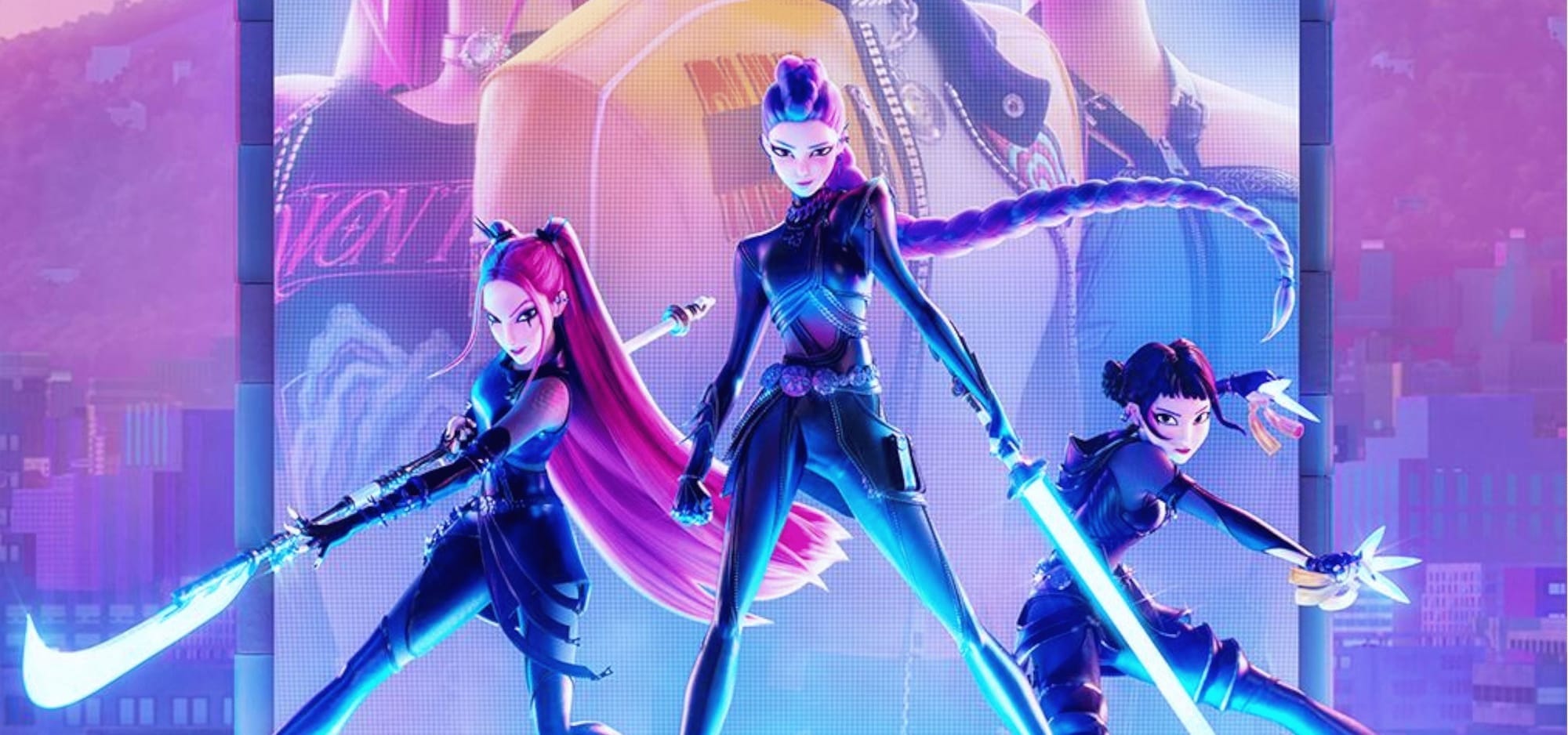
Ok, but the actual fight scenes are FIRE 🔥
I haven't seen fight choreography this smooth since BEASTARS (2019). And, admittedly, most of us could never think of replicating it because it involves a lot of stretchy high kicks, dissolving weapons, and jumping out of planes – but, hey, one can dream.
My favourite moment of the entire film is when Rumi salutes us before falling backward out of the plane in "Takedown." I didn't see any parachutes either, so I'm not sure how they managed to finish the skydive safely, but that's a superhero question I'm willing to ignore. That girl is a woman after my own heart. The music synchronization to this was on point.
Fun fact: This skydiving scene looks almost exactly like the opening credits of the 4Kids version of Mew Mew Power (2002 – known as Tokyo Mew Mew in Japan). Check it out below:
The Humour
Playing off of countless references.
How do you make a culturally Korean but productionally American movie appeal to the masses? Stuff in as many funny references as you can!
Now, in some movies, this can be an awkward move. If the references aren't played right, it can sound like a really bad stand-up comedy show.
What Kpop Demon Hunters does right is that it doesn't dumb down the dialogue to serve its English audience, nor does it overexplain Korean words (in fact, it doesn't explain anything – that's on you to find out). The script can be on-the-nose, yes, but that's more for clarity, since young kids are watching the movie as well. Combined with more mainstream jokes and cultural allusions, the movie manages to play the fine line between comedy and drama very well.
The references it makes are basically its version of Disney easter eggs. Here are the ones I noticed:
- The K-drama meet-cute: Whether it's a sloshed coffee or a fall off of a tree trying to rescue a lost kitten that results in the hot guy catching the girl and taking her for her a literal spin as romantic music plays in the background, there are endless ways the main characters can meet in a K-drama. However, they usually fall into one of love-at-first-sight or enemies-to-lovers. Rumi and Jinu's first meeting, when Jinu bumps into Rumi and sends her flying, is definitely an enemies-to-lovers trope. And it's funny not only because of its execution but the fact it's also making fun of itself. Outrageous meet-cute's are also popular (to a much less satisfactory extent) in C-dramas.
- "We don't kiss for 24 episodes!": Another sweet K-drama allusion is that Rumi and Jinu never kiss or do anything strictly romantic. The farthest they go is holding hands in one music-video-like duet. K-dramas are famous for withholding the singular kiss until at least halfway through the series, with lots of blushing and stammering in the episodes beforehand. Rumi and Jinu's together-status is unclear; they're not in a relationship, they're not exactly friends, and frenemies doesn't sound right either. But they are each other's confidantes, and deep down there is a love brewing – just not necessarily romantic love at this point. (I love how they went about this because the film is about the demons we face, and Rumi and Jinu could each be anyone in our lives, not just romantic partners.)
- The music video sequences: Action and fight scenes – "How It's Done" and "Takedown" – that are actually music videos in their own right, with the tracks synchronized to the beat (both musical and physical). "Golden" is literally portrayed as a music video within the film (to stellar results). In fact, every song from "Free" to "Your Idol" is animated with the cuts and angles seen in Kpop MV's.
- Mew Mew Power OP: Yup, putting it here again for your reference. The plane-jumping scene looks like a direct homage to the opening song animation of Mew Mew Power, when the five girls fall through the sky all relaxed, like they do it everyday in the face of defeating evil. I kind of doubt if the creators knew about this at all, but I'm not complaining.
- The sick beats: How is it possible for a musical to contain songs that are equally catchy all throughout? Here, we must mention Teddy Park, the music producer for Blackpink, who's an allusion to Kpop all by himself and who worked on the film. If the songs sound familiar, that's because they share similarities with Blackpink's "Ddu-Du Ddu-Du" and others. The girl and boy groups in Kpop Demon Hunters are themselves based on popular Kpop groups like Blackpink, TWICE, ITZY, and BTS. I'd argue that the songs in the film blow any Kpop song I've ever heard out of the water, not because they're mostly in English and I can understand it off the bat, but more so for their soul and storytelling qualities. Plus, the arrangement of each song is simply magnificent.
- The boy band archetypes: For anyone unaware, Kpop groups are packaged to perfection before debuting, and that includes public image, style, role in the group, and even personality. Baby Saja must be the funniest archetype because he fits exactly into the mold of rapper-maknae-and-oversized-knits. They did surprise me, however, when Baby Saja opened his mouth for the first time and rapped a low note, such a difference from his pretty-in-pastel shell. Then there's your totally-ripped guy (Abby), the flirter (Romance), and a wild card (Mystery). Jinu is, of course, the classic dependable leader who is probably fluent in three or four languages – a direct counterpart to Rumi.
- The girl group archetypes: HUNTR/X's roles are more defined. Rumi is the hold-it-all-together glue the group is built around, as well as the lead vocalist. Mira is the classic cool girl, visual, and fashionista of the group, with the hard-hitting dance moves to top it off. Zoey is the cute maknae – smiley, expressive – with an alter ego as a hardcore rapper, composer, and lyricist. They round each other out perfectly. (And, I suspect, for production financial and creative reasons, the girls apparently do triple-time by creating their own choreography and songs instead of relying on outside choreographers and writers... in addition to being demon slayers and Kpop idols. Talk about a full life.)
- The distinctive art styles: In moments of cuteness and comedy, the faces and even bodies of the girls sometimes turn into other popular animated proportions in an homage to various art styles seen in anime, manga, and traditional Western sketch. It's hard to pin them down individually, but together these moments draw inspiration from Spider: Across the Spider-Verse, Jojo's Bizarre Adventure, The Powerpuff Girls, Teen Titans, The Way of the Househusband, and Back Street Girls, amongst others.
- The superhero tower: I laughed when HUNTR/X's apartment was shown. In a reference to every superhero tower/surveillance plant/sky-rise ever, the girls live in an ultra fancy, completely enviable skyscraper with floor-to-ceiling windows in the living area overlooking the city and an actual logo on the building. I half expected the Bat-Signal to shine. I can swear their apartment is almost a carbon copy of the Teen Titan's, especially that wraparound couch. And look at that gallery-style walk-in closet. Regina George would have a fit.
- EXO's "MAMA": The beginning of "Your Idol" is a direct callback to third-generation boy group EXO's debut single, "MAMA" (i.e. the ominous changing at the start of the song). They're even dressed similarly, with the EXO members in hooded temple robes and the Saja Boys in Joseon-era traditional garbs. The film's chanting is a reversed warble of HUNTR/X's mantra, "We are hunters, voices strong." In the studio soundtrack, this part is replaced with actual Latin lyrics.
A lot of the other references are culturally based or recognizable to those in the industry, so I won't list them all out, but you can find them in anything from the Korean rice dogs to the cram school textbooks to the colour-changing concert glowsticks.
The Themes
We can all relate.
The most touching aspect of the film is its handling of universal themes like shame, inner demons, selective love, trust, and family.
Shame is mentioned the most because the demons (and, in essence, Rumi) live off of it, whether they want to or not. Shame keeps them tethered to the voice of Gwi-Ma, the demon king who spouts belittling comments in their ears at always the most inopportune moments.
Or, we can look at them as the most opportune moments because Gwi-Ma knows exactly when to infiltrate your head when you're down on your luck. He breaks through to your deepest, darkest side and compels you to listen to the hate.
Jinu has been suffering with this shame for 400 years, and his character development is a gentle nod to the saying that pain is inevitable, but suffering is optional. While I can't attest how true this saying actually is, Jinu does realize that even he can change and transform, and even 400 years is not too late.
Shame alienates people, and it's difficult to decipher because others, as third parties, often do not know if someone is feeling shame. It's one of the most well-concealed emotions a human can harbour.
The message about facing your inner demons and allowing friends and family to help is clear.
I watched Cinema Therapy's YouTube analysis of the film, and one thing they say is very true: hate is unifying. For a while, HUNTR/X is unified by their mutual hate for the Saja Boys and the competition they bring. Before long, however, Rumi starts questioning the hate that's consuming them and their song, "Takedown," wondering whether it's the right sentiment to put forth into the world. Just as quickly, when two demons impersonate Mira and Zoey onstage in an impromptu performance of "Takedown," we see how that same hate can be turned on its head and used against the very person it came from.
There's a message here for all of us: hate is compelling – even attractive – but it's rarely fortified for long and may ultimately do more harm than good. Caution is advised when feeling hate.
Instead, Kpop Demon Hunters is a love story, but not with someone else. The lesson is learning to love yourself in your entirety, including the mistakes you've made and regretful actions you've taken. "We can't fix it if we never face it," is the true moral of the tale.
Honesty with yourself is the first step to achieving your true potential.
The film also touches upon family: found, adoptive, and dysfunctional. I'm particularly interested to see in the sequel how Rumi's heritage as a half-demon will be handled and the choices behind her "mistaken" existence.
The Songs
What's a musical without a theme song?
Of course, we can't finish off this analysis without mentioning the songs.
I have yet to meet anyone who's disliked the music in this film. It's beaten "Let It Go" to top the Billboard Hot 100 as No.1, and "Let It Go" was the musical phenomenon of its time.
It's perhaps no coincidence that EJAE, the voice of Rumi and co-writer of the songs, has a backstory to rival her own character's. Allegedly, EJAE had been a Kpop trainee, having gone through the whole hustle of dance, voice, and image training. There has always been a disproportionate ratio between trainees and those who actually debut. For whatever reason, she was never chosen to debut, and eventually the industry told her she was too old to anymore. (In Kpop, "too old" can range anywhere from 21-28 years old, generally.) So, EJAE retreated for the next ten years or so into the backside, writing songs for other artists. When the producers of Kpop Demon Hunters heard her voice, however, they were drawn in by her depth and soulful tone, and the rest is history.
It also helps that EJAE can hit some of the hardest notes in the human vocal range, making the songs super dynamic and never repetitive.
Every single song in the film is a bop, and I personally like the girls' songs far better than the boys', which was kind of the point. EJAE mentioned in an interview that while pleasing, the boys' were meant to sound kind of hollow and empty, unlike the soulful resonance of the messages in HUNTR/X's songs.
I'm not a musical expert, so I can't go into composition or theory much, but as a consumer, this movie has blown my mind with what's achievable in pop music.
A week and a re-watch later, I still can't decide which song is my favourite.
Final Thoughts
Kpop Demon Hunters is my absolute favourite film of 2025 and definitely makes my list of personal all-time favourites.
I don't think it's perfect; there are some pacing issues I would've liked to see implemented better (some moments, the characters don't even get a chance to breathe before going into the next line), but the design, music, and morals more than make up for it.
I'm glad to have already converted two more non-watchers at this point to this masterpiece of musical fiction.
Now if only they'd make a Jpop Demon Hunters... I would kill (in a non-hateful way) to see that.
![[Review] Fall for Dance North 2025: HOMEGROWN Signature Programme 2](https://images.unsplash.com/photo-1621873493371-9aea49f66b9b?crop=entropy&cs=tinysrgb&fit=max&fm=jpg&ixid=M3wxMTc3M3wwfDF8c2VhcmNofDF8fGJhY2tzdGFnZXxlbnwwfHx8fDE3NjIzMDQzNDR8MA&ixlib=rb-4.1.0&q=80&w=600)