China Then & Now: Returning to the Mainland for the First Time in 11 Years
This article is long overdue, but as we wrap up Chinese New Year 2026, I wanted to share my thoughts on my experience returning to China last year after more than a decade of absence.
It was a month of discovery and rediscovery.
I traveled through time in a haunted hotel at Sleep No More Shanghai...
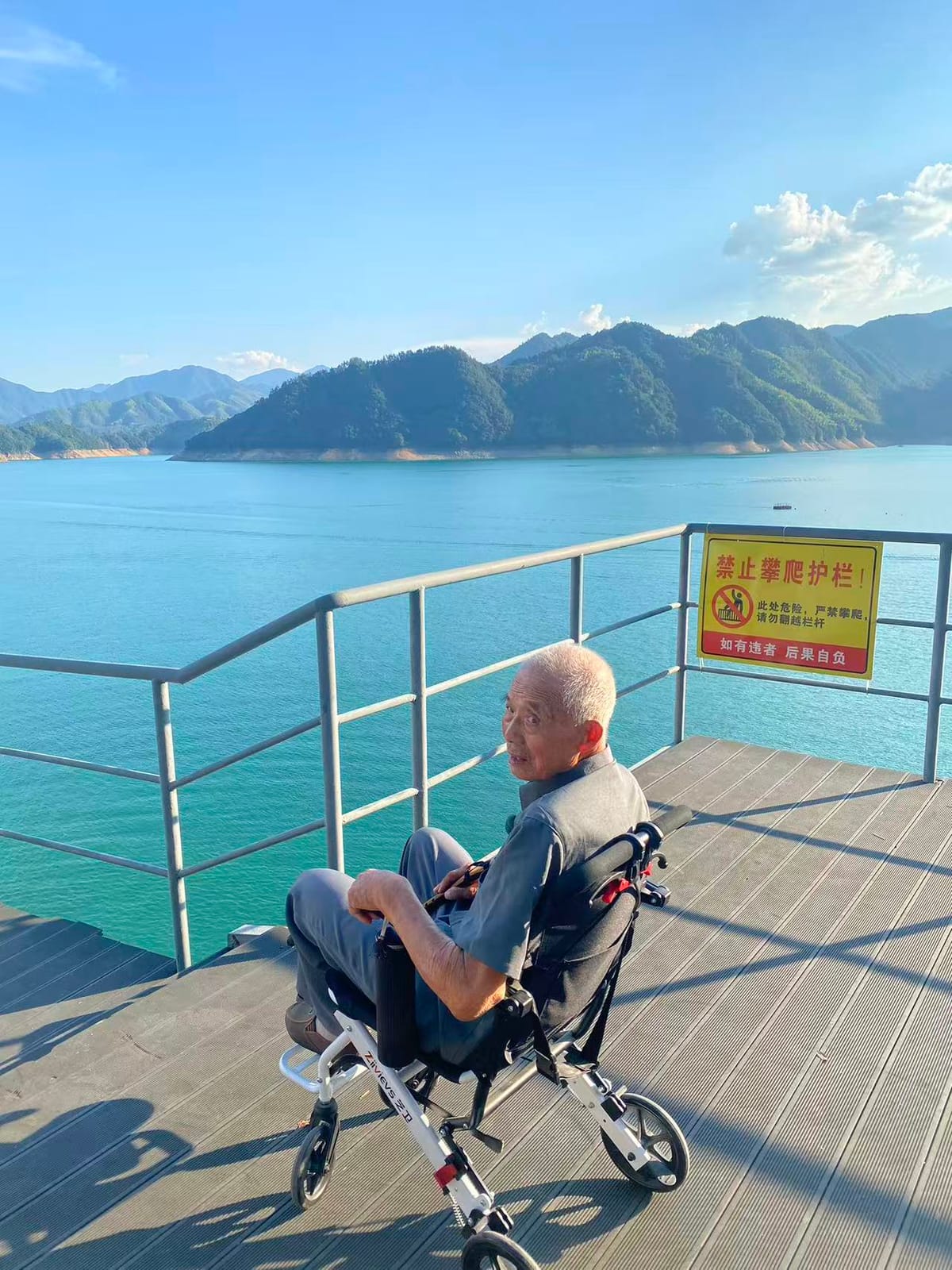
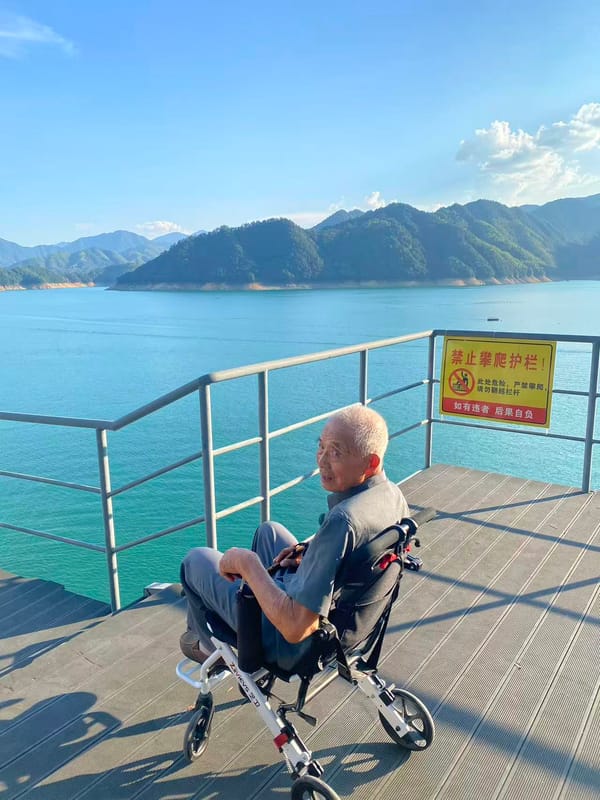
Discovered a hidden resort near my grandma's village...
Got a traditional Chinese dress photoshoot in Quzhou's Old Town...
Boated to a secret island in the mountains...
Spent 12 hours in Hangzhou via bullet train...
And happened upon oodles of old photos from my parents' younger days.
Of course, there were lots and lots of family get-togethers, overeating, poker games and mahjong, and one very traumatizing experience that had me crying for four hours straight afterward (all I'll say is, no family is perfect).
In short, the highs were high, and the lows were very low (sound familiar? check out Berlin: City of Loneliness). Either way, returning to China was an eye-opener that ultimately had me feeling more in awe of the country than not. This wasn't always the case.
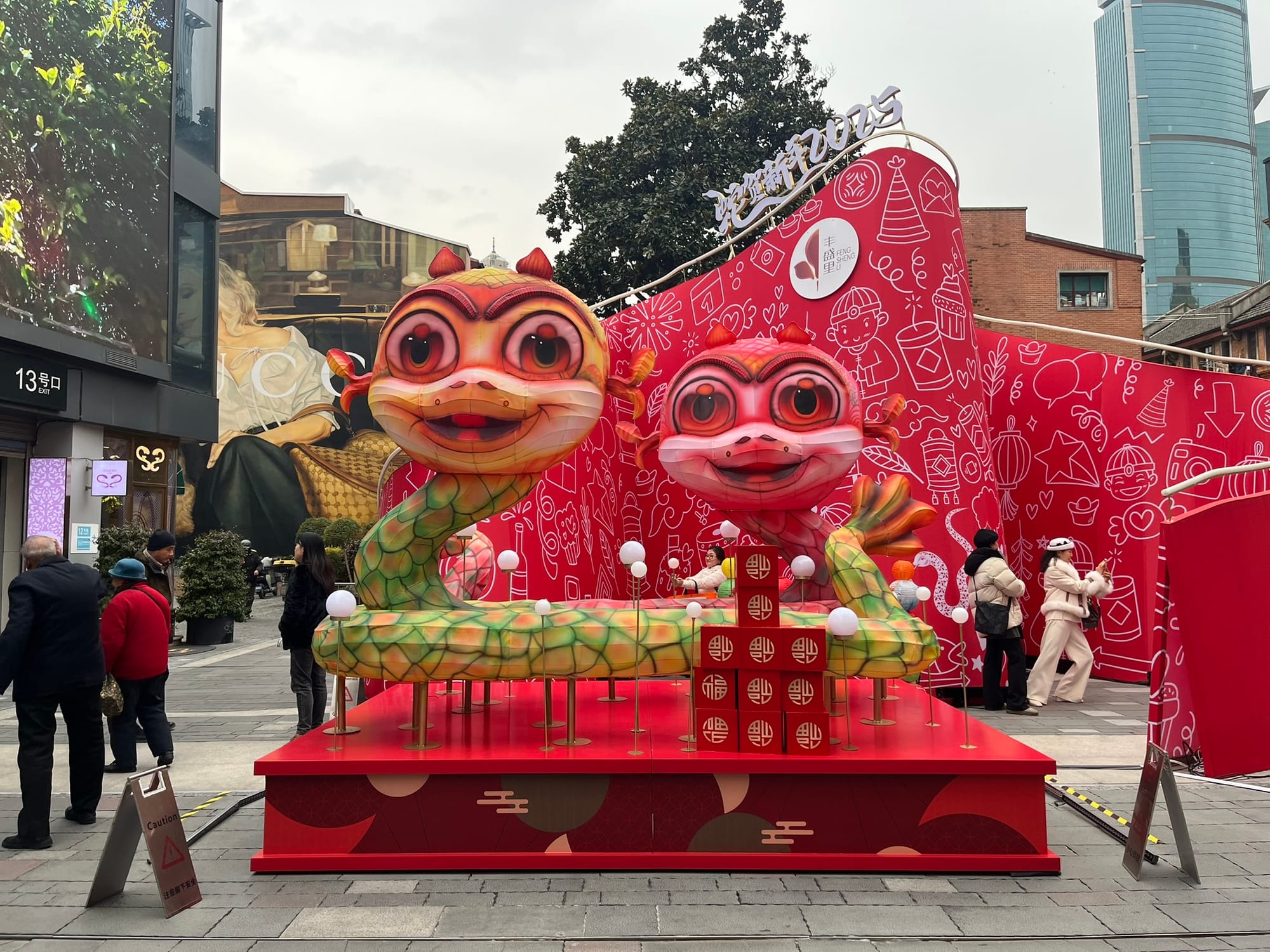
Before 2025, the last time I stepped foot on Chinese soil was 2014, when I was living there for school. I wasn't "from" there, though. I was born in China, yes, but had immigrated to Canada when I was young. I considered Canada my home, a home I'd been unfairly ripped away from when I was nine.
To say that I hated my six years in China was an understatement. It wasn't just culture shock; it was learning a new language and being the new kid and meeting new family members – people my child's brain had long forgotten since the first move abroad.
Essentially, I was a stranger among my countrymen.
The shift was devastating. I didn't understand what made my peers click (Kpop what?) or why it felt innately uncomfortable to walk outside in anything more revealing than a t-shirt. The grey skies dulled my senses, and there was a period of time when the smog got so bad, my classmate wore a full-on gas mask to school.
I coughed and hacked every season from the nuisance speck that triggered a spot in my throat.
I didn't even start school until the next semester. They tried to test me for local, but I couldn't read the characters. There was a sort of English division, but only five students were in the class, and I would've had to skip a grade.
Finally, my parents paid the big bucks to enroll me in an American-curriculum international school an hour's drive away from our home.
The first time I sat in my new fourth-grade math class, I was dumbfounded. I had barely begun the multiplication table in Canada, and here they were deep into long division and fractions. My desk mate shot me a weird look as I timidly raised my hand when the teacher asked if anyone was unfamiliar with Chinese currency. (Turns out, the kids had lived in China most of their lives, despite holding foreign passports.)
All those years, I never felt fully connected to my classmates.
It didn't help that everyday, I was made intensely aware of the class difference between my family and theirs. There was a clear understanding that if you attended an international school, your parents were rich – making the few "poor" students an anomaly. This was further complexified by the fact my school was already considered the "ghetto" of international schools.
(Wildly enough, this was kind of true. On a field trip to another school, I was astounded at the literal acres of land they occupied and the facilities they had, including a swimming pool, tennis court, multiple dance studios and theatres, and miles of perfectly lush, green grass. It was like a country club for teenagers.)
Finally, in my last year there, I worked up the nerve to ask my parents if I could move back to Canada – by myself if need be – and to my surprise they said yes.
It was just as well; that last year proved to be the most trying time of my adolescence, with an ugly mix of threat of expulsion (by a mentally ill classmate's equally mentally ill mother), peer-turned-bully, boundaries overstepped. It was the first time I experienced true terror.
It was also the first and only time I initiated an altercation that almost turned into a physical something. I was done being stepped on.
So I left. And thank goodness for that. My last two years of high school in Canada remain some of the fondest memories of my childhood.
But as my adult world expanded beyond the confines of high school foolery, and my world view started to match the endless horizon, I realized I didn't hate China anymore. In fact, I kind of missed it.
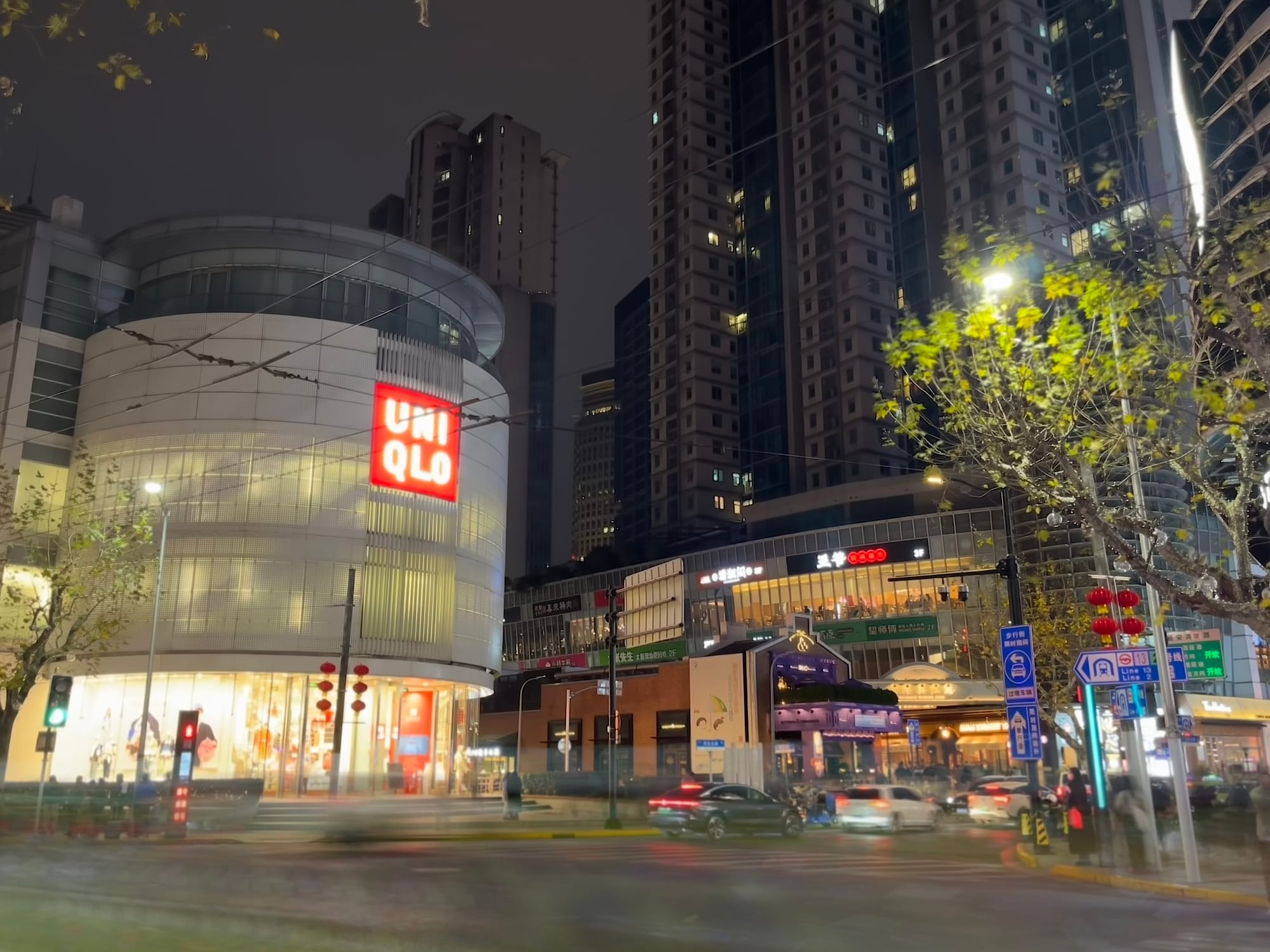
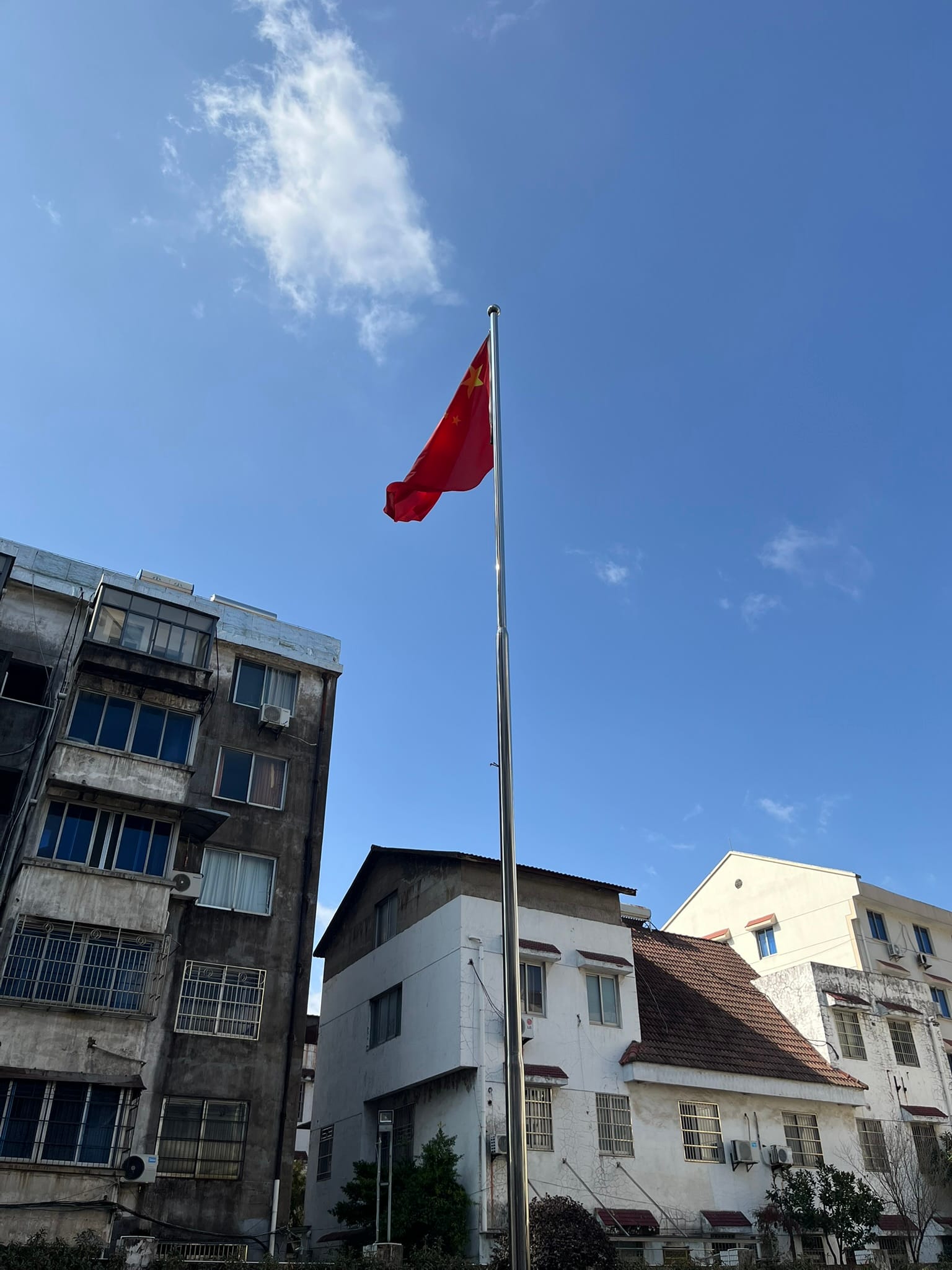
Modern malls vs. older apartments.
Not the bullies, of course. And definitely not the memories of snobby cliques (does that change anywhere?). And we can rule out the smoking and excessive drinking and traditional standards of propriety imposed upon women.
Family.
Those are the people I missed. My grandma, my cousins, my aunts and uncles.
Common culture.
That's what I missed. A place where I could put my understanding of C-dramas to use and not have to explain everything.
Identity.
I will always be Canadian at heart, but the maturing side of me let in the Chinese side as well, not just in name. Let's be honest – there's always going to be a certain ease in the presence of people who look, talk, and act similarly to you.
What I'm referring to is a shared understanding due to having been raised in the same culture – the words unspoken.
As I boarded the plane for a stopover in Tokyo before arriving in China (after an exasperating denied-boarding scenario), I was genuinely excited to see how the place had changed – just like me – and whether we could finally meld.
Nowadays, China is a hyper-modern country with lightning-fast bullet trains and delivery apps for everything. Yet, some habits die hard, and the smell of raw meat sold at roadside stands pummeled my nostrils as I walked by – ah, home sweet home. Don't even get me started on those squat toilets.
I definitely still witnessed a strong undercurrent of politics and "connections" beneath the modernity. I only hope that I'm better able to navigate them now.
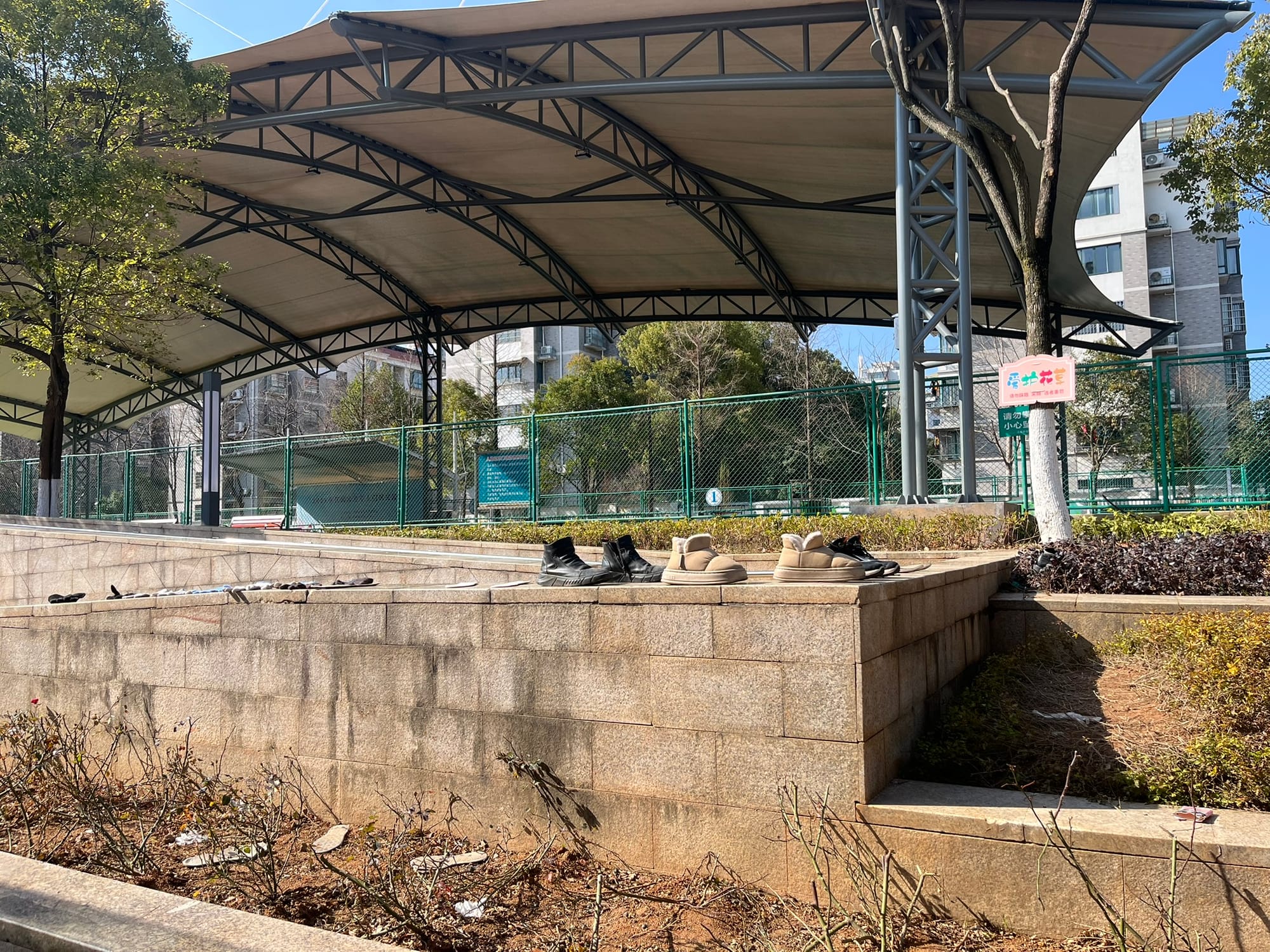
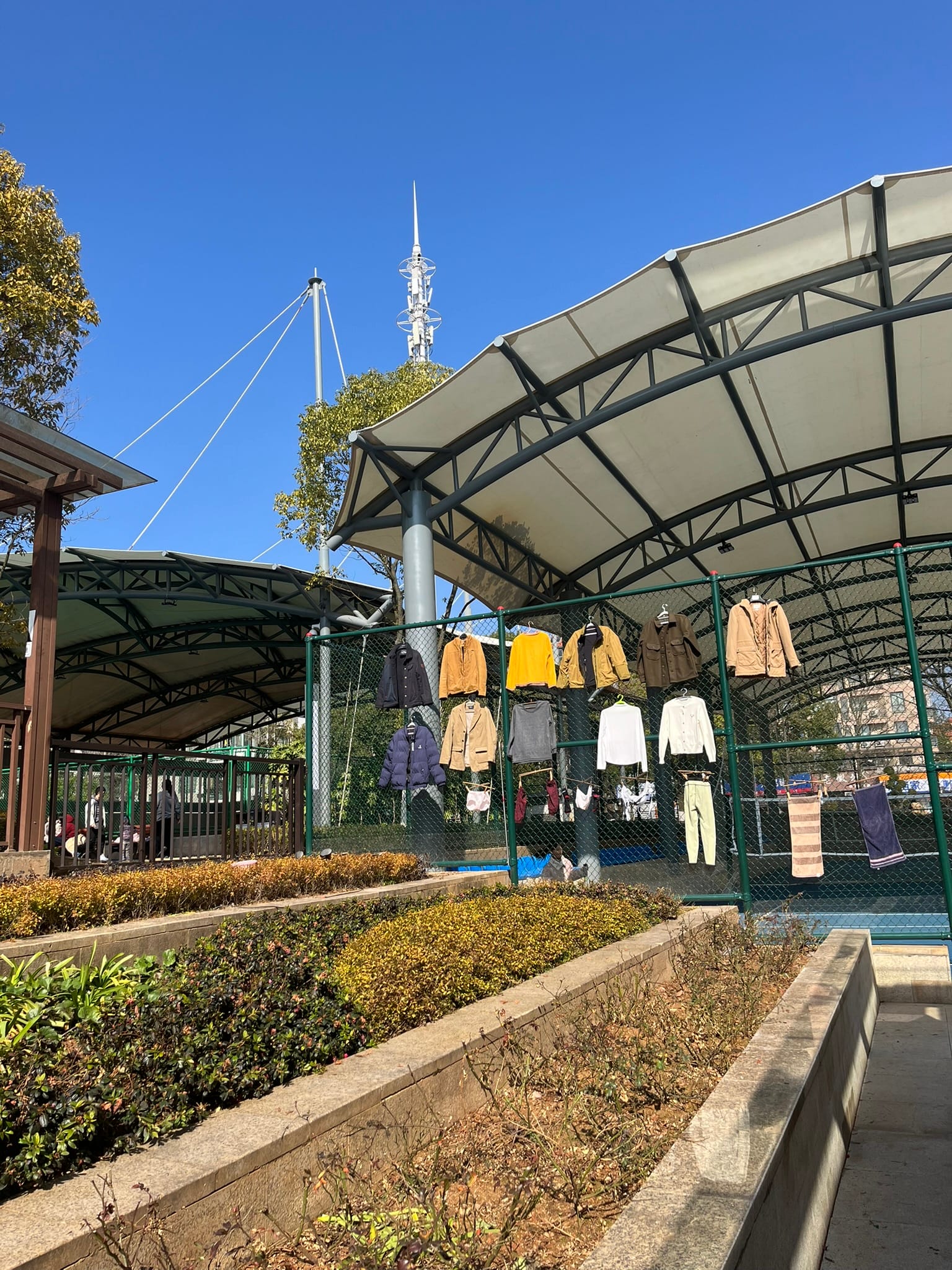
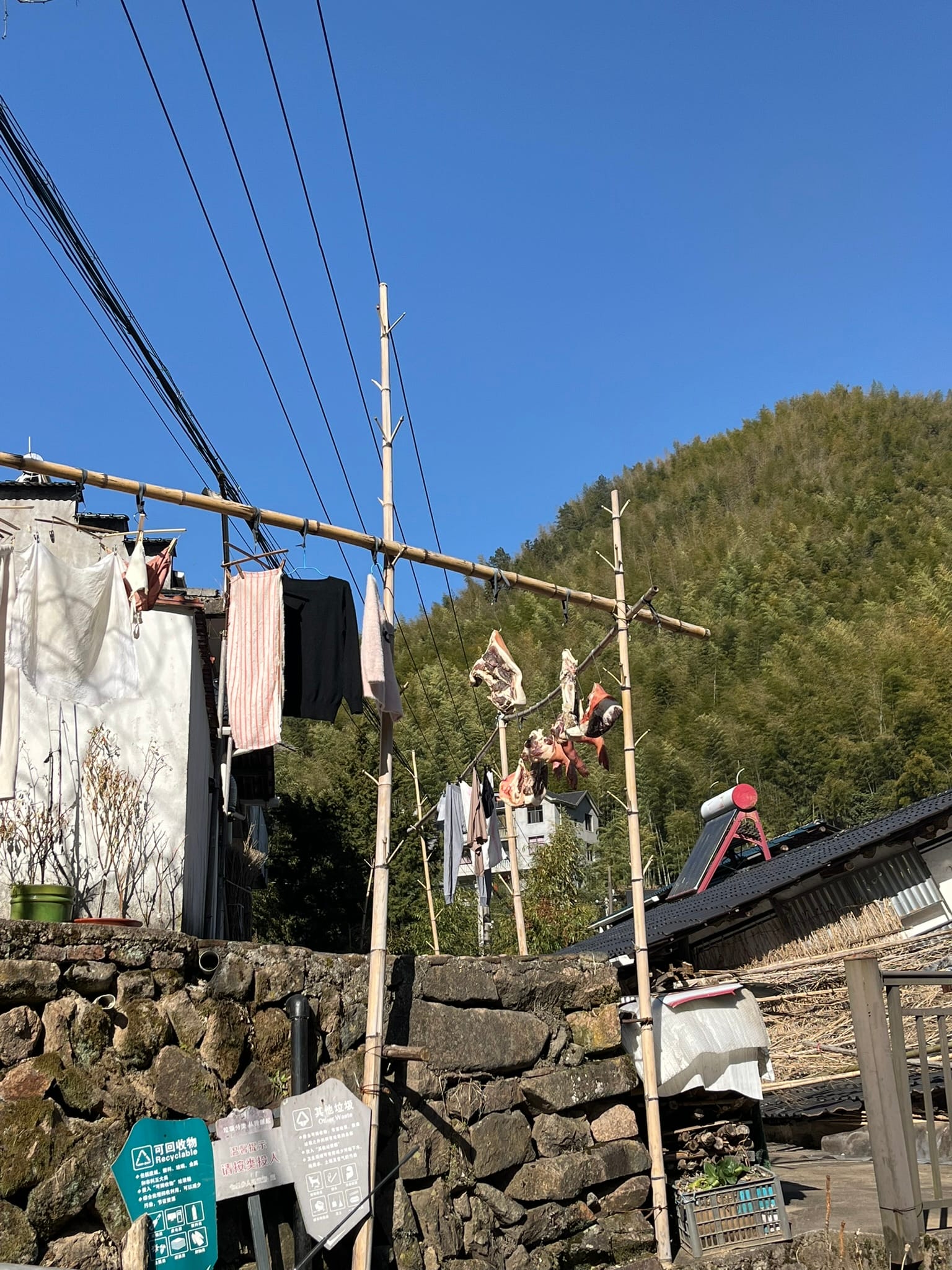
The Chinese will hang stuff out to dry anywhere.
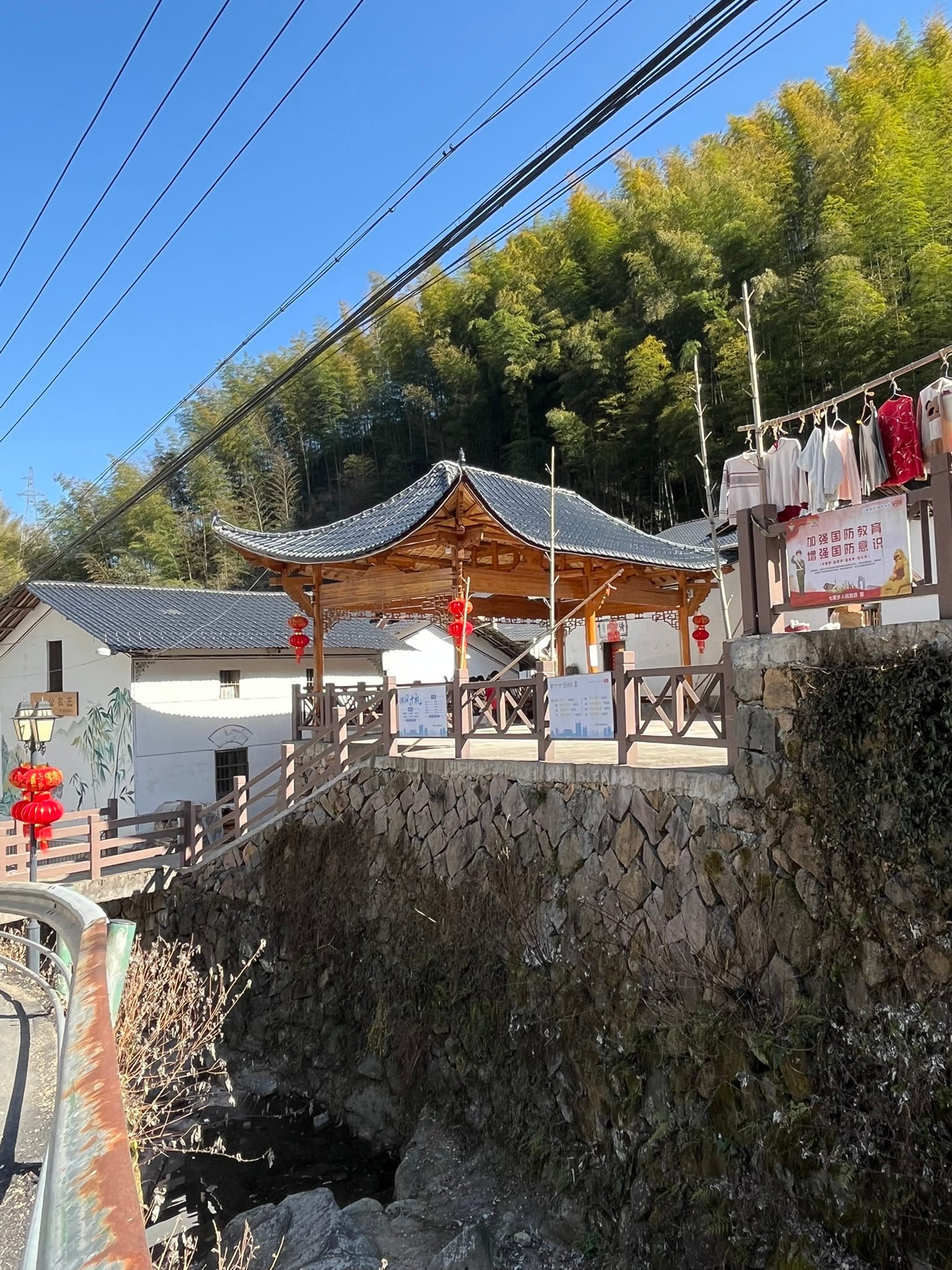
Revisiting during Chinese New Year is a different ball game altogether – from the über-packed train stations to the literal towers of gifts stocked in car trunks. I couldn't wait to see my grandma's mountain village again (yes! my grandma lives on a mountain!). Its nickname is "Paradise Village" for its beautiful natural terrain of mountain, river, and bamboo forests.
But even the villages were different, and I was acutely aware of the passage of time in my absence. The transmission lines overhead had increased threefold, the traditional houses demolished and rebuilt and demolished again. In my mother's generation, everyone wanted to leave the rural areas for the city. Now, they all want to come back. The villages lack nothing.
I'm not ashamed to say I accepted the red envelopes my grandma and aunts and uncles stuffed into my hands, with the due rounds of "no, no, I musn't."
I soon realized, however, when my mother asked me to record how much everyone had given me, that receiving was no longer child's play. There's a transactional, reciprocal element to it that shows itself when it becomes our turn to give money to someone's wedding or a younger cousin or a newborn baby.
Rather, it's not that this reciprocal responsibility suddenly appeared in my adulthood; just that, as a child, I had the bliss of being ignorant to it. The awkwardness of it – keeping track of who gave me how much – left a sour taste in my mouth, but I swallowed it with the understanding that this was meant for me to keep an eye out for myself.
Despite this awkward interlude, there were benefits to aging up. I could communicate and interact with my previously much older-seeming cousins a lot better, thanks to the confidence and personal life experiences I'd attracted over the years. Ironically, my Mandarin had improved from before, even with ten years abroad.
My aunts and uncles, too, saw me as (slightly) more of an adult. At least, that one uncle finally stopped leaving slobbery kisses on my cheek.
On the flip side, many of those older cousins now have children of their own, and I played the "long-lost aunt" game again with a good handful of those who'd never seen or even heard my name before.
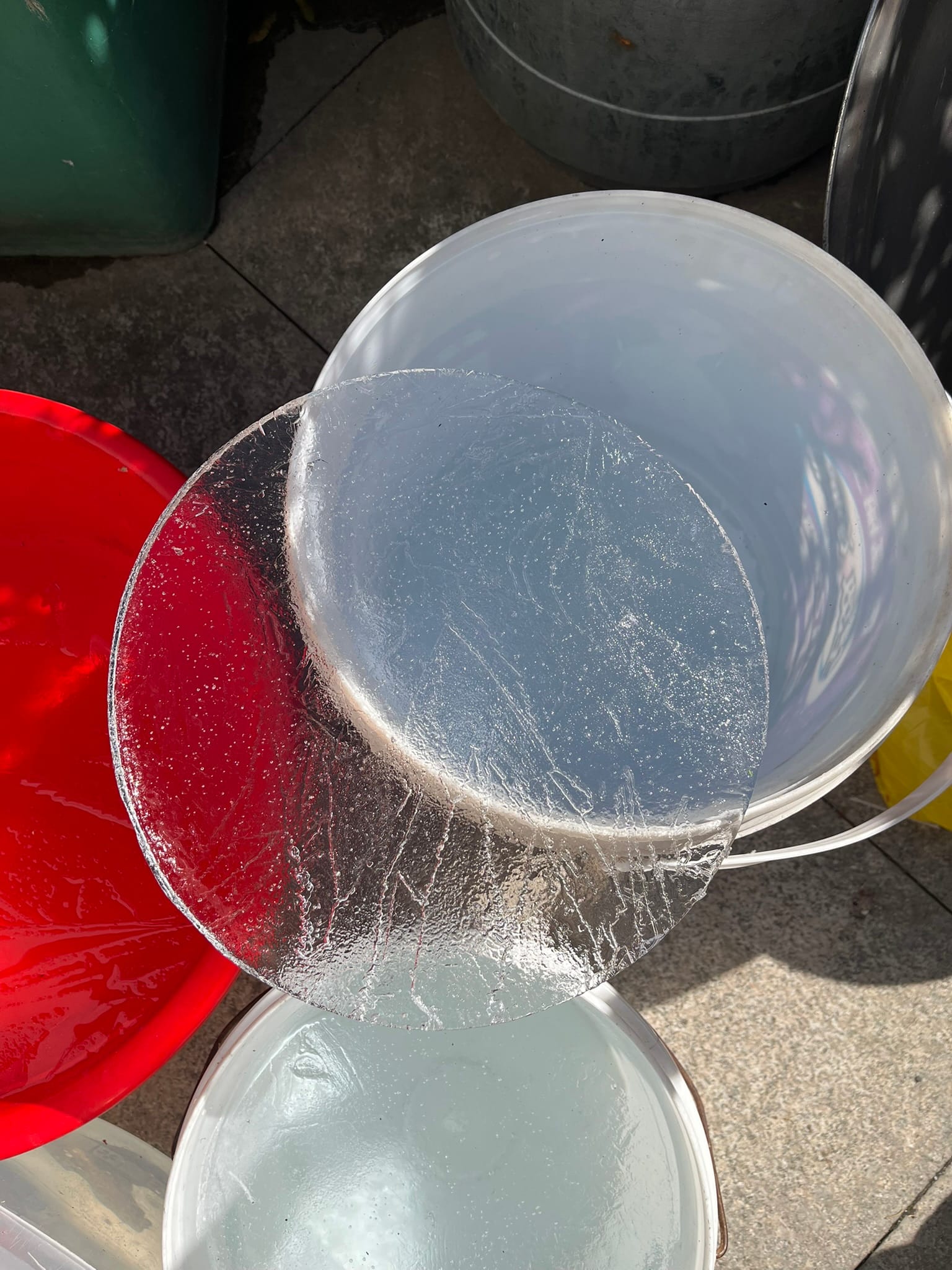
It was a cold year, and the mountainside was freezing.
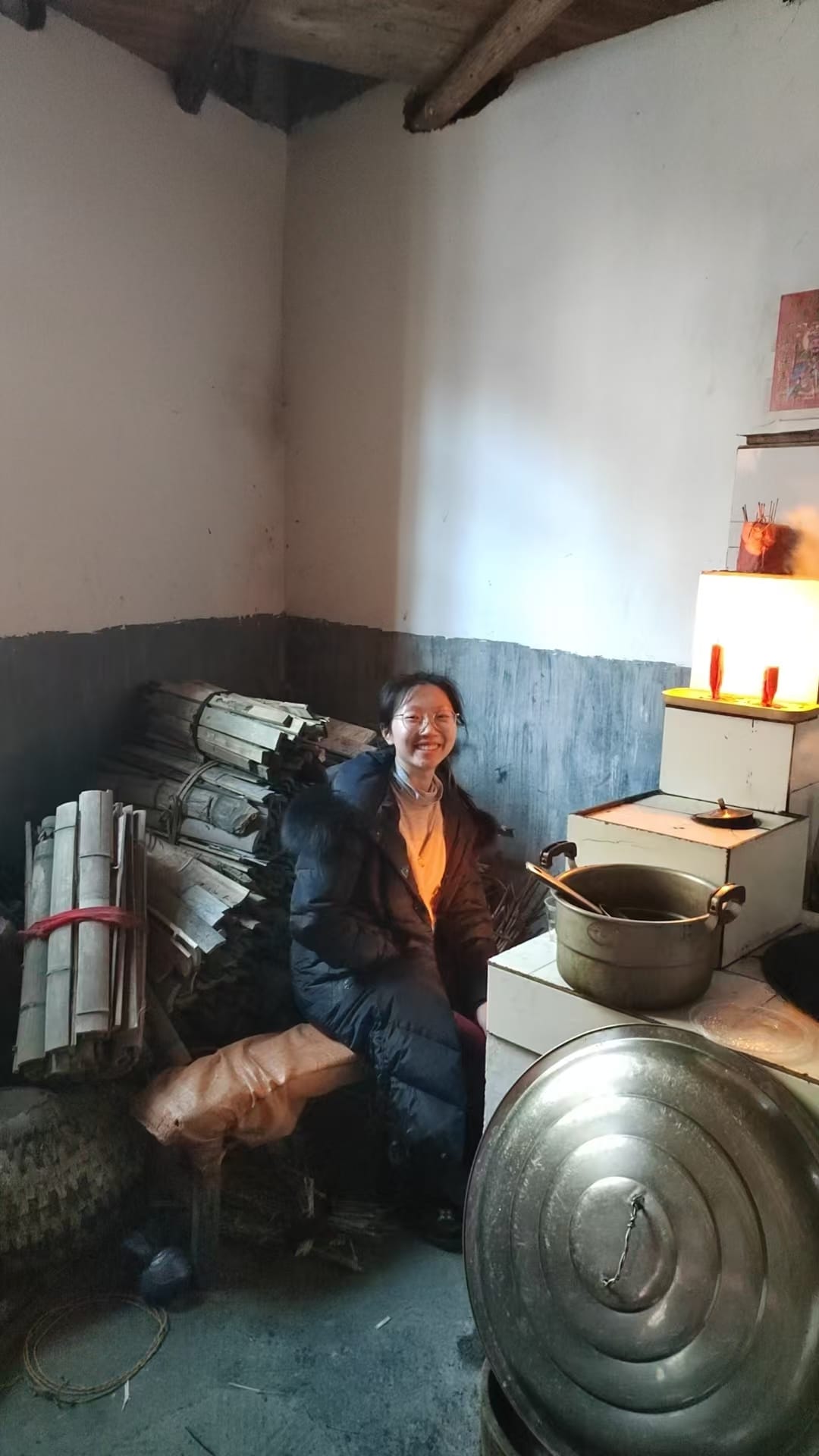
One memory stands out. The women of the family and I were huddled over charcoal ash pots together in my grandma's kitchen. There was nothing but outstretched fingers hovering over the warmth and conversation in the air. The single lightbulb glowed blue and cool.
My newfound niece joined us later, and in this intimate round of laughter and family, she finally opened up to me and the others. One of my cousins tapped away silently on her iPad as we talked. (Ironically, by this year, my niece had forgotten all about me but remembered the silent cousin on the iPad.)
It was a rare moment unencumbered by any distractions, a reminder of days past when communication was amusement, and just breathing the cold, chilly air together seemed enough.
Outside of the village, we stayed at my aunt's home in Quzhou City. My mom barely recognized it.
Around the New Year's, Quzhou comes alive with daily evening performances at the historic shopping streets. The Rainbow Bridge lights up the Qu River, and people horde the banks and ships to see the light show and "striking iron flowers." It's a huge departure from the sleepy factory town it once was (and still is, in many ways).
My aunt dug up old family photo albums for me, and I pored over the never-before-seen grainy images of my mom and dad, graduating, fresh out of school, holding their wedding, visiting relatives... that period of time when everybody seemed effortlessly fashionable.
They were once young adults just like me, facing the world with wide smiles and a light only the young can encompass.
Spending our final week in Shanghai, I was inundated with a sense of autonomy I'd never felt before in this city. After all, it used to be that I was 14, and the world was big and confusing. As an adult, the world was still big and confusing, but at least I had my own finances and a transit card and the language skills to navigate it.
I thoroughly enjoyed seeing Shanghai through my own eyes, making my own plans.
The nostalgia hit me hardest when I emerged from the subway station near Super Brand Mall – the place my friends and I always went for fun – and was struck with a deep sense of familiarity.
I didn't need directions; I just knew where to go.
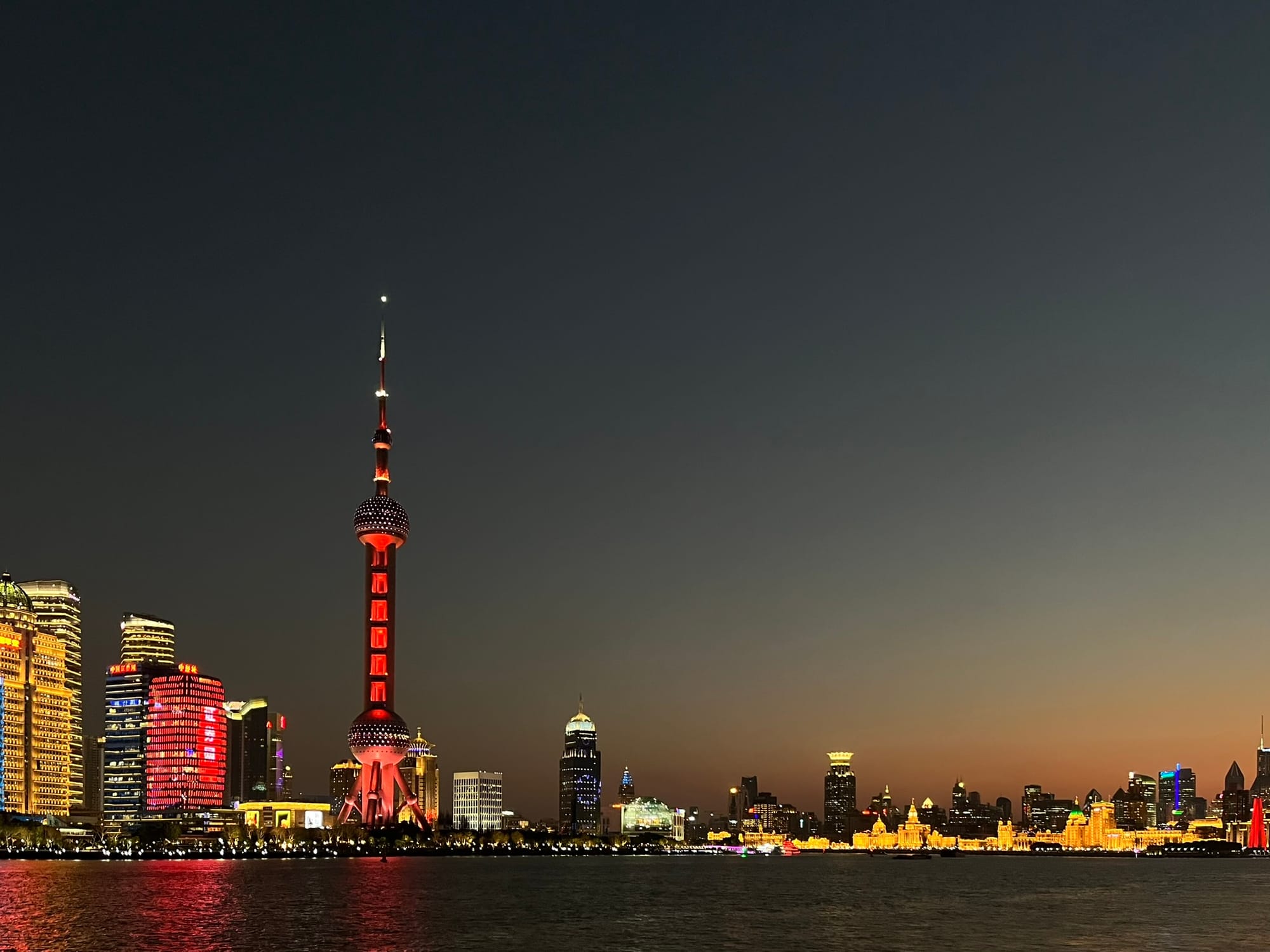
The Pearl Tower hovered over me like it had all those years ago. Walking across the skybridge toward the mall, everything seemed the same. Couples taking photos, the cars circling on the freeway beneath us.
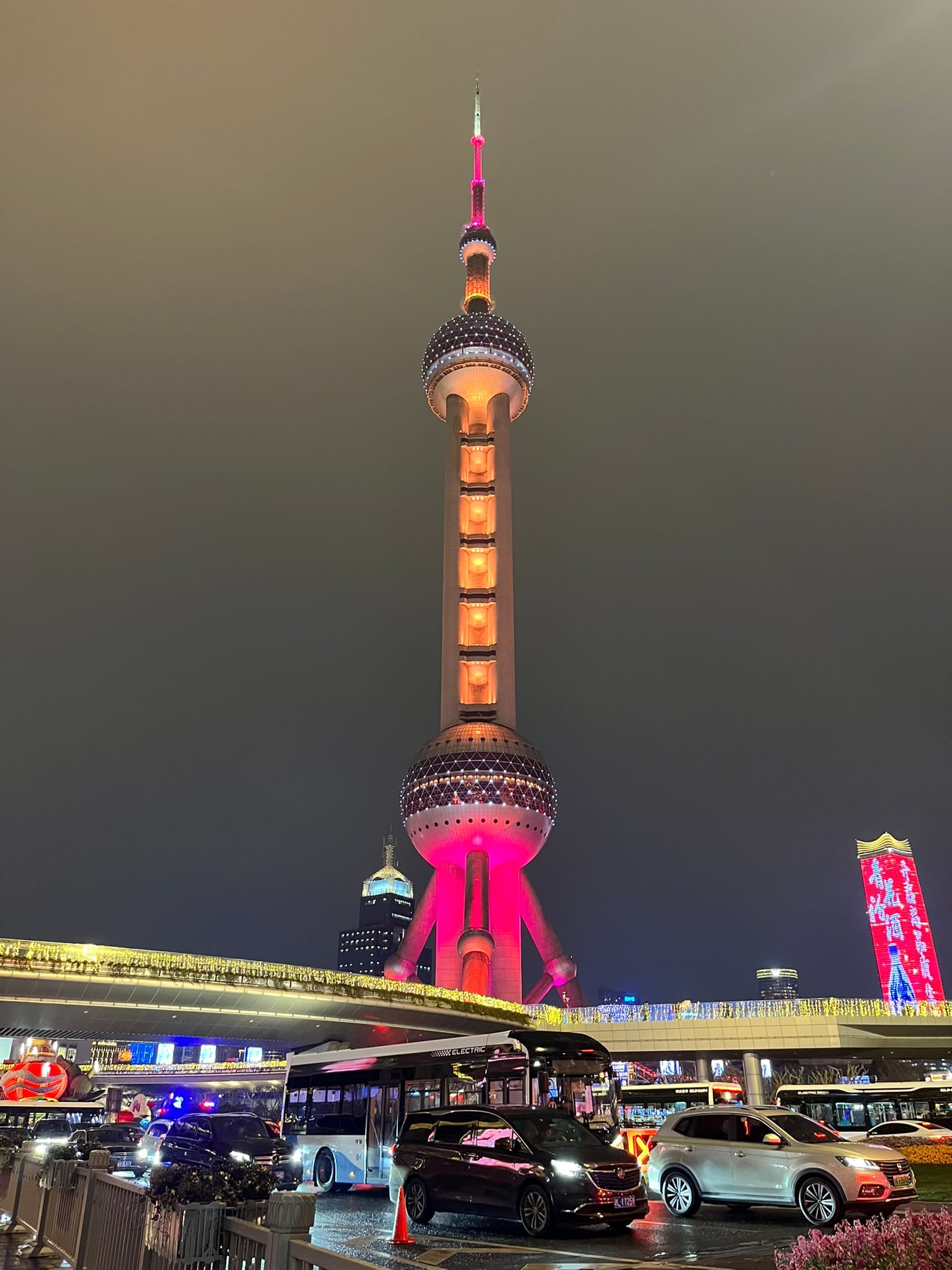
But, of course, it wasn't the same, and these were not the same people, and I was not the same me. How long had it been since I'd talked to those friends, how long since we'd stopped a thief right there on those steps? (It's a long story.)
Deep down, there was a sense of longing. Not a sad one, just observation.
The malls have changed a lot. There are barely people in them anymore due to the massive difference in online vs retail prices. I met up for dinner with a formerly close friend from high school in Canada who'd moved back, and in this way, I rounded out the circle.
I am now fluent in Mandarin.
I watch more C-dramas than American TV. I listen to Asian music. There comes a time, I feel, when a person naturally gravitates to their origins. They start to learn who they are on a deeper level, the ancestral vessel.
And as I await the completion of the new water dam the government is implementing amongst the rural mountainside, wondering how the landscape will change yet again, I'm constantly reinterpreting my past experiences with grace and compassion.
I am a child of two cultures, and one thing's for certain:
I am very proud of my heritage.
For more adventures in China:
 Angela Xu