![[Review] Hofesh Shechter's Theatre of Dreams | Luminato Festival](https://images.unsplash.com/photo-1576724196070-cf259e69503f?crop=entropy&cs=tinysrgb&fit=max&fm=jpg&ixid=M3wxMTc3M3wwfDF8c2VhcmNofDIwfHx0aGVhdHJlJTIwZHJlYW1zfGVufDB8fHx8MTc4MDg4NjA3OHww&ixlib=rb-4.1.0&q=80&w=2000)
[Review] Hofesh Shechter's Theatre of Dreams | Luminato Festival
Hofesh Shechter does it again.
The UK-based dance choreographer Shechter is having a moment, what with multiple international tours and his first full-length commission for the Paris Opera Ballet just last year (with costumes by CHANEL!).
I first came upon Hofesh Shechter's work in his shorter piece, Double Murder, back in 2022 at the Fleck Dance Theatre in Toronto. With a name like that, you bet I'm there.
It was a freakish, clown-ish sort of dance, like a macabre circus gone wrong – and I mean that in the best way. Since then, Shechter's work, for me, has resonated with a sort of dark but playful energy, a Grimm's fairytale come alive. Combine that with influences of Berlin nightlife and pounding beats, and you've got one hullaballoo of a melting pot of crazed desire, lust, and macabre storytelling.
(I actually described it to my friend as "horror dance" when persuading her to see Theatre of Dreams with me.)
His work hinges on parody, of sorts. My take on the clownish movements and attire of Double Murder is that it showcases the falsities we bring to reality in our daily lives.
Theatre of Dreams, part of Luminato Festival 2026, takes this concept and inverts it, focusing on the subconscious and seemingly random vignettes that play out in our minds when we are most vulnerable.
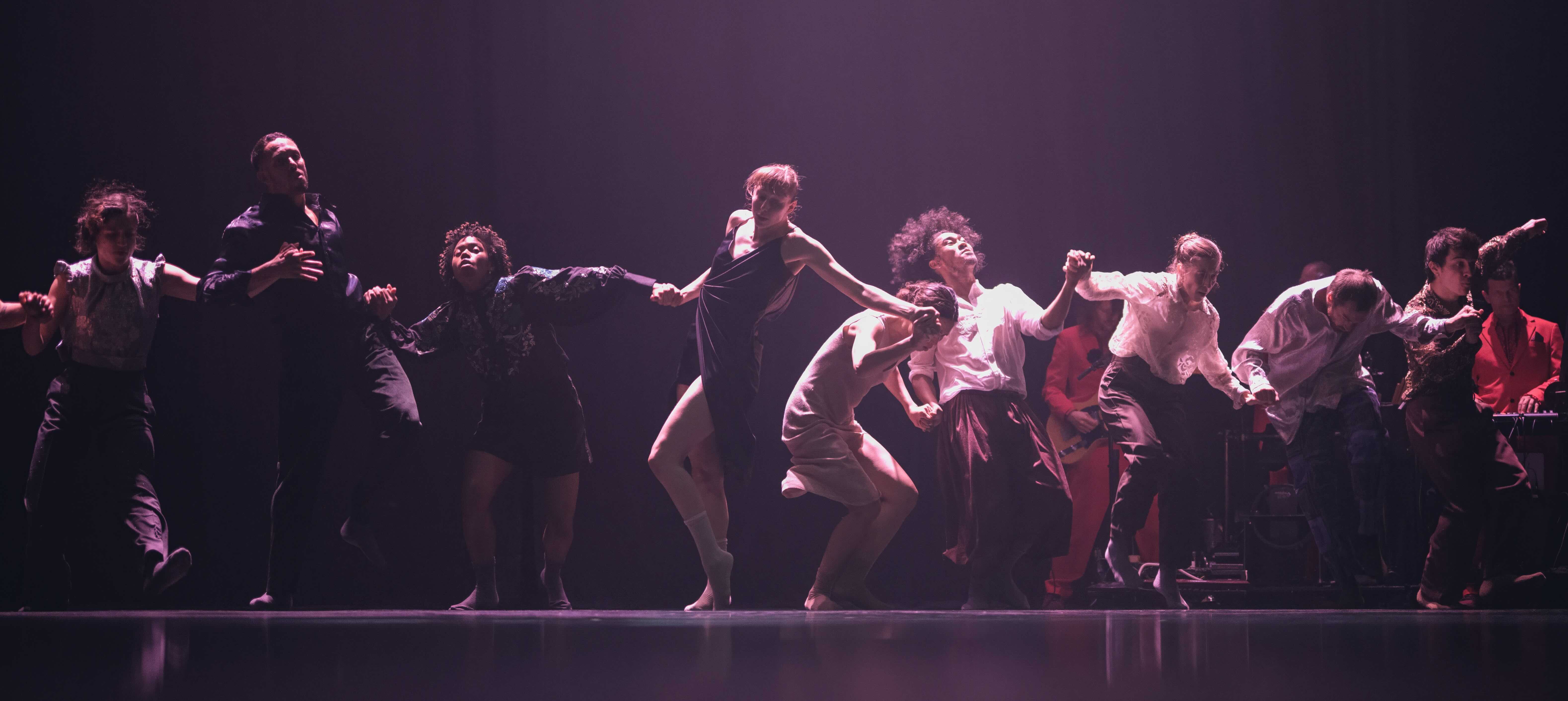
From full-on nudity (the famous naked-in-front-of-an-audience dream, but literal) to running desperately with no progress to a quick and joyful interlude of salsa and samba, the dancers in this theatre of dreams gave it their absolute all in terms of energy, vitality, and life.
The Dream Begins
A man in a splash-spotted suit loped onstage from the audience. A woman with "Security" printed on her back reached for him unsuccessfully, crying out, "Sir! You're not allowed on the stage–" and quickly acquiesced when she realized her mistake.
But was it?
It definitely grabbed all our attention. The house lights were still on. We knew instinctively the man was definitely a performer, but was the security guard? She gave a look of embarrassment and smiled her way back to the wall, tugging her shirt up to cover her reddening cheeks.
The audience chuckled. After a moment, they gave her a round of applause, and I followed suit.
Was it staged? Was it a true mistake? Did no one tell security where the performer would be entering from?
Where is the line between dreams and reality? Are we blurring the boundaries as we speak?
If the security interlude was real, it fit the night's theme surprisingly well. How can we tell fantasy from fact if we can't even discern the realities before us?
The lights fell, and the show began.
Curtain Play
When it comes to theatre and dance, designers have gotten creative with lights, sound, projections, set, pyro, and an abundance of other resources to shake things up. Yet, I've yet to see a show until now make use of something the theatre already has like Theatre of Dreams did: the curtains.
In a show of very carefully timed and clever curtain calls, the heavy black wing curtains were let in and out, framing the solo man, then a group, then three people, then more, in a series of narrow vignettes with overhead light that told the beginnings of a dream gone rogue.
The choreography was immediately Schecter-esque, and it only got more so, as the dancers pulled out ensemble work with alternating "skips," for lack of a better word. Moves you might have done in character dance or ballet or even on the playground as a child, but amplified.
The costumes were pedestrian, with variety of suits, simple dresses, and athleisure.
In and out the curtains swayed with a choreography of their own (thanks in no small part to the backstage crew). The dancers gathered together for a roiling rave, arms flailing and chests pumping.
The night slowly got crazier and wilder. A woman appeared behind the curtains to perform ballet semi-nude. Just as quickly, she disappeared again.
A man appeared completely nude, completely comfortable, as he sauntered slowly toward the edge of the stage, daring us to look.
He later reappeared in another vignette naked again, only this time he was visibly shocked, hands cupped around his penis, and scurried off like a mouse.
Throughout all this, the clothes came on and off and on and off, and I had to wonder how many costume changes were happening offstage.
The set collaborator is credited as Niall Black, and together with Schecter, they've made great use of light, shadow and negative space. One scene stands out to me: when the dancers were circling in a loop across a framed curtain opening, like those paper chains of human figures. There were only 12 dancers total, and some were dancing out front, but the rest of them somehow managed to achieve the illusion of a neverending stream of bodies.
I imagine they made use of the dark space just beyond their overhead light to run around and rejoin the line.
There's so much one can do with a little bit of creativity and the oomph to test it out.
Live Music & Audience Interaction
A trio of musicians in bright red suits revealed themselves halfway through the piece to play. Like the dancers, they shapeshifted their way around the stage, one moment appearing here, the next appearing there – with all of their musical equipment too – aided by the cover of the curtains.
The lead singer scatted to the tunes of jazz in time with the background music. At one point, the atmosphere changed, and the dancers invited everyone to stand up and shake it off with them. The clapping stayed strong as the audience egged the performers on. Eventually, one dancer with a line mic cheekily told everyone, "You can sit down now."
"Back to the dark," my friend called it, as the dancers fell into another round of fervent fever dreams and manic moves.
What I Loved About It
Interestingly, I don't remember how the piece ended. The value of a Hofesh Schecter work is in its journey, not the destination.
What I do remember – vividly! – is the pure energy. Schecter's works are buoyant yet deeply grounded, kinetic and free. Theatre of Dreams didn't have a lot of "technical" elements as contemporary dance goes (think multiple pirouettes, gravity-defying lifts, etc.). And that's precisely why I love his work so much.
Without pulling out a single aerial or flashy trick (or even many changes of level), the dance spoke for itself with its unabashed energy in being simply what it was: choreography done right and done proud. The curtain fell – for real this time – on a standing ovation.
There wasn't even any real duet, in my opinion. Personally, I was grateful for this because one of the dangers of contemporary choreography is whipping out a duet or trio to naturally fill in the time between "acts." When they're done well, they're very well. When not done well, they're very boring.
In a way, Schecter's choreography gives more opportunity to dancers who don't necessarily have all the tricks in their basket. The dance world has become so saturated with spectacle that it's easy to forget the essence of dance is the give-and-take of output, the meaning, the internal world presented in an external way...
That's not to say the dancers couldn't perform tricks; Theatre of Dreams was a reminder that oftentimes the simplest formats make for the best outcomes.
There was quite a bit of improvisation as well, and I find that it's in these moments that a dancer can really surprise themselves and the audience with an out-of-the-pocket idea.
What I Wanted to See More of
As I mentioned before, there weren't many changes of level within the choreography, and from my vantage point on the balcony, some of the dancers were lost in this sea of unvarying height.
There was quite a bit of improvisation as well, with the arms and legs seeming to meld into each other. These ensemble scenes felt a bit repetitive as the night went on, though I find it's in these improvised moments that a dancer can really surprise themselves and the audience with an out-of-the-pocket idea. It's all about balance, at the end of the day.
I would've liked to see more dynamics in these regards, but it's a very solid piece regardless. Theatre of Dreams has actually been touring around the world for quite a few years now, and I look forward to new creations Schecter has up his sleeve.
What's Next?
Hofesh Schecter is definitely one to watch as he continues to lead the European dance scene in new and vibrant paths. His works stem from the deepest, darkest parts of our humanity with a Freudian-esque twist. Perfect for psychology lovers, thriller lovers, and beginner contemporary viewers to really get into the literal groove of dance.
To learn more about Theatre of Dreams:

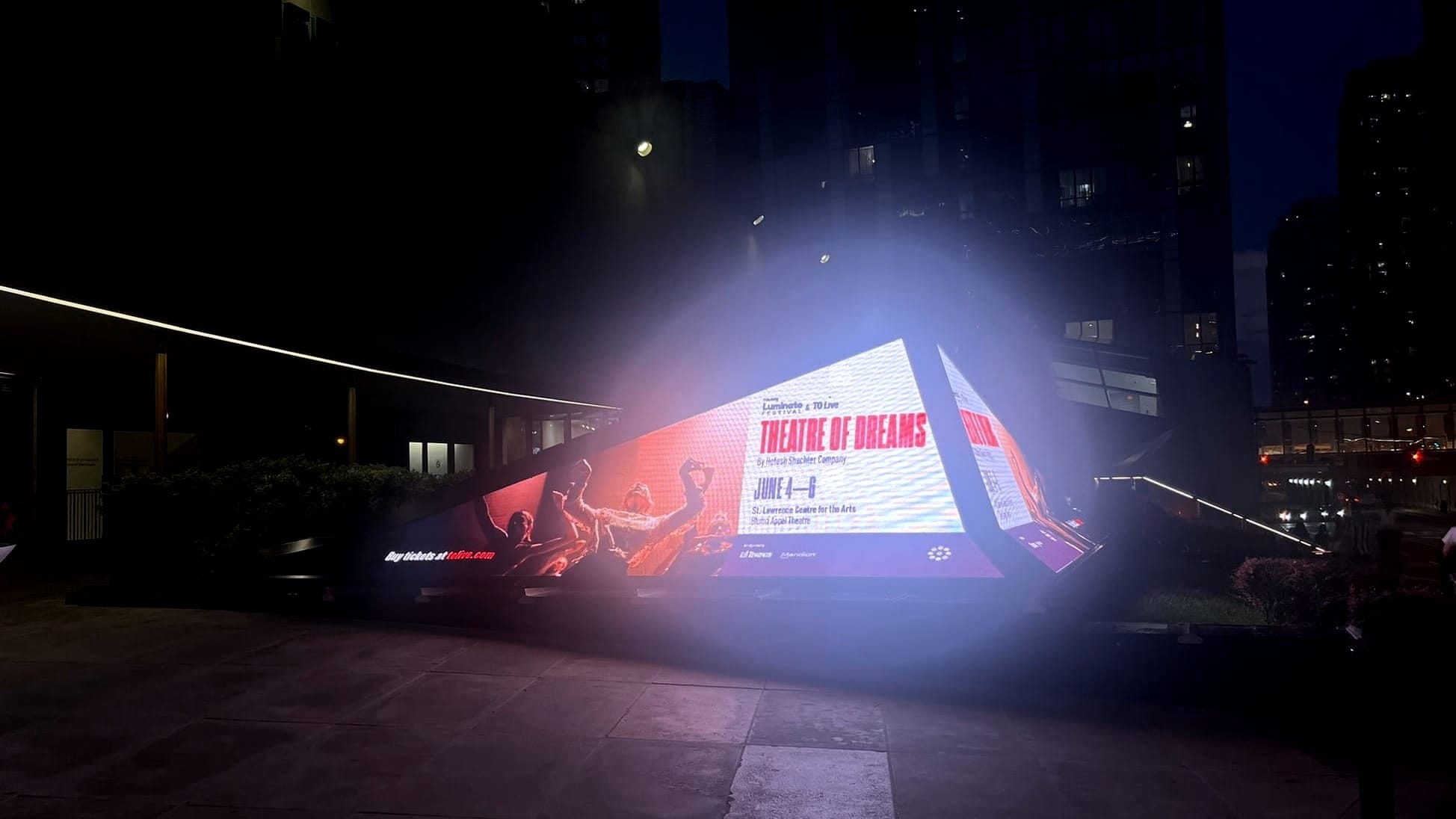
I saw Theatre of Dreams in Toronto at the Bluma Appel Theatre on June 6, 2026.
Luminato Festival will continue for the rest of June in Toronto, Ontario, with more dances, circus acts, and theatre to satisfy artistic cravings.
Stay tuned for further reviews ★★★★★
![[Review] Play Dead | Luminato Festival](https://images.unsplash.com/photo-1584333640509-4c1d3e206781?crop=entropy&cs=tinysrgb&fit=max&fm=jpg&ixid=M3wxMTc3M3wwfDF8c2VhcmNofDI1fHxjaXJjdXMlMjBteXN0ZXJpb3VzfGVufDB8fHx8MTc4MzQ1ODA5NXww&ixlib=rb-4.1.0&q=80&w=600)

![[Review] The Air Between Us & Heartbreak Hotel | Luminato Festival](/content/images/size/w600/2026/06/IMG_6482-1-1.JPEG)